RECAPRUSH TV GUIDE
Loki (2021)
After stealing the Tesseract during the events of “Avengers: Endgame,” an alternate version of Loki is brought to the mysterious Time Variance Authority, a bureaucratic organization that exists outside of time and space and monitors the timeline. They give Loki a choice: face being erased from existence due to being a “time variant” or help fix the timeline and stop a greater threat.
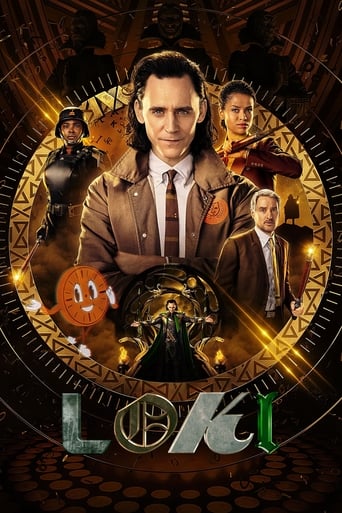
Overview, poster, and credits from TMDB.
Read and watch our full season recap ↓FROM THE RECAPRUSH LIBRARY · FULL SEASON RECAP
Loki Season 1 (2021) Recap & Ending Explained: Why Sylvie Breaks the Sacred Timeline
11 min read · Estimated reading time— views
Intro + RecapRush Viewpoint
Loki Season 1 takes the villain who attacked New York, removes his army, magic and royal status, then asks what remains when he can no longer perform superiority for an audience. Across six episodes, the Time Variance Authority turns Loki into evidence against himself. Mobius gives him trust without worship, Sylvie gives him a mirror he cannot dismiss, and He Who Remains reveals that the “Sacred Timeline” is not natural order at all—it is one frightened man's system for preventing worse versions of himself from returning.
RecapRush viewpoint: The finale is not a simple argument between reason and revenge. Loki finally changes because he asks Sylvie to stop for her sake rather than his own. Sylvie cannot hear that change because every authority in her life has disguised control as protection. Her choice frees the timeline, but it also proves the season's darkest idea: trauma can recognize a cage more easily than it can recognize sincere love.
Full spoilers ahead. This article covers only Season 1, including all six episodes and the July 14, 2021 finale. Season 2 developments are deliberately excluded.
Featured Image

Table of Contents
Quick Facts
| Detail | Verified information |
|---|---|
| Official series title | Loki |
| Scope | Season 1, six episodes |
| TMDB TV ID | 84958 |
| Original run | June 9–July 14, 2021 |
| Creator / head writer | Michael Waldron |
| Season director | Kate Herron |
| Platform | Disney+ |
| Main cast | Tom Hiddleston, Sophia Di Martino, Owen Wilson, Gugu Mbatha-Raw, Wunmi Mosaku, Eugene Cordero, Tara Strong, Richard E. Grant and Jonathan Majors |
Full Spoiler Recap — All Six Episodes
Episode 1 — “Glorious Purpose”
During the Avengers' 2012 time heist, Loki escapes New York with the Tesseract and lands in the Gobi Desert. TVA hunters arrest him for creating a branch in the timeline. Inside the bureaucracy, magic does not work and Infinity Stones sit useless in a desk drawer. Judge Ravonna Renslayer prepares to have him reset, but analyst Mobius recruits him to help investigate a dangerous Variant.
Mobius forces Loki to watch the life this displaced version has not yet lived: his role in Frigga's death, reconciliation with Thor, and murder by Thanos. Loki escapes long enough to confirm that the Tesseract is powerless, then admits his cruelty is a performance used to make others feel small because he is afraid. Mobius reveals the fugitive they are hunting is another Loki.
Episode 2 — “The Variant”
Loki deduces that a Variant can hide from TVA detection inside apocalypses, where nothing the intruder does creates a meaningful branch. He and Mobius test the theory at Pompeii, then trace the fugitive to a future Alabama superstore during a hurricane. The Variant possesses TVA hunters, confronts Loki and reveals herself as Sylvie.
Sylvie has stolen reset charges and sends them to numerous points across history, producing a wave of branches that empties the TVA's forces into the timeline. She escapes through a Time Door. Loki abandons Mobius and follows her.
Episode 3 — “Lamentis”
Loki and Sylvie fight through the TVA before he uses a TemPad to escape with her to Lamentis-1 in 2077, hours before the moon is destroyed. The TemPad loses power, forcing them into an uneasy partnership. Sylvie reveals the crucial truth that TVA employees are not created by the organization: they are Variants taken from lives on the timeline and stripped of their memories.
The pair board a train toward an evacuation ark, but Loki's recklessness gets them thrown off and the TemPad breaks. They fight through a collapsing city only to watch the ark—their last apparent escape—be destroyed.

Episode 4 — “The Nexus Event”
As destruction approaches, Loki and Sylvie form an emotional connection so improbable that it creates a nexus spike and allows the TVA to locate them. Mobius initially rejects Loki's claims about the agents, but Hunter B-15 has recovered memories through Sylvie's enchantment. Mobius secretly swaps TemPads with Renslayer and sees proof that she ordered Hunter C-20's death after C-20 learned the truth. Renslayer has Mobius pruned.
Loki and Sylvie are taken before the Time-Keepers. B-15 frees them, and Sylvie beheads one of the supposedly divine rulers—revealing all three are mechanical puppets. Before Loki can tell Sylvie how he feels, Renslayer prunes him. A mid-credits scene shows Loki alive in the Void, surrounded by Classic Loki, Kid Loki, Boastful Loki and Alligator Loki.
Episode 5 — “Journey into Mystery”
Pruned matter is not destroyed; it is sent to the Void at the end of time, where the cloudlike creature Alioth consumes it. Loki meets multiple Variants and learns that survival here means hiding from the monster. Sylvie prunes herself to follow him, while Mobius—also alive—helps her navigate the wasteland.
Loki decides killing Alioth is impossible and proposes enchanting it instead. Sylvie joins him. Classic Loki creates a magnificent illusion of Asgard to distract the creature and sacrifices himself when Alioth turns on him. Loki and Sylvie combine their magic, enchant Alioth and reveal a citadel beyond the Void. Mobius returns to the TVA to expose its lies; Loki and Sylvie enter the Citadel.

Episode 6 — “For All Time. Always.”
At the Citadel, Miss Minutes offers Loki and Sylvie a place inside a rewritten timeline if they abandon their mission. They refuse and meet He Who Remains, the man behind the TVA. He explains that variants of himself discovered the multiverse and began a war. He ended it by weaponizing Alioth, isolating one timeline and creating the TVA to prevent branches that could produce another conquering variant.
He Who Remains offers them a choice: kill him and unleash dangerous versions of himself, or replace him as the TVA's rulers. Once the timeline crosses a threshold he can no longer predict, branches multiply. Loki believes the warning may be true; Sylvie believes it is another manipulation. They fight. Loki stops defending himself and tells her he does not want a throne—he wants her to be okay. Sylvie kisses him, sends him back to the TVA, and kills He Who Remains. His final words, “See you soon,” warn that death will not end his threat.
More from RecapRush
 The Shawshank Redemption (1994) — Full Spoiler Recap & Ending Explained
 Heart of the Beast (2026) Recap & Ending Explained: Why James Must Teach Odin to Leave Him
 Avengers: Endgame Encore (2026) Recap & Ending Explained: What the New Footage Changes
At the TVA, Mobius and B-15 discuss the rapidly branching timelines. Loki tries to warn them, but neither recognizes him. He looks across the room and sees that the Time-Keepers monument has been replaced by a statue of He Who Remains—or one of his variants.

Cast + TMDB
Cast and Characters








This season is matched to TMDB TV series 84958, with the article explicitly scoped to Season 1.
| Actor | Season 1 role |
|---|---|
| Tom Hiddleston | Loki Laufeyson |
| Sophia Di Martino | Sylvie |
| Owen Wilson | Mobius M. Mobius |
| Gugu Mbatha-Raw | Ravonna Renslayer |
| Wunmi Mosaku | Hunter B-15 |
| Eugene Cordero | Casey / Hunter K-5E |
| Tara Strong | Miss Minutes (voice) |
| Richard E. Grant | Classic Loki |
| Jonathan Majors | He Who Remains |
Ending Explained + RecapRush Interpretation
Why does Sylvie kill He Who Remains?
Sylvie was abducted as a child, erased from her life and hunted across apocalypses by the institution He Who Remains created. His claim that dictatorship prevents a greater war may be accurate, but it asks her to trust the architect of her trauma. Killing him is revenge, liberation and an assertion that no one person has the right to prune entire realities for stability.
Why does Loki try to stop her?
Loki has finally learned to fear power rather than crave it. He does not suddenly support the TVA; he wants time to test the warning before making an irreversible choice. Crucially, he tells Sylvie that he wants her to be okay. This is the opposite of the transactional affection that defined his old life.
What is the altered TVA?
The finale confirms the TVA Loki reaches is not the exact organization he left. Mobius and B-15 do not know him, while a statue openly honors the ruler whom the old TVA concealed behind fake Time-Keepers. The episode intentionally leaves the precise mechanics unresolved at the end of Season 1. What matters here is that Sylvie's action has broken the controlled order and Loki is stranded inside a version of the institution where his relationships have vanished.
Who is He Who Remains?
He is a variant of the same multiversal figure whose other versions can become conquerors. He says he isolated the Sacred Timeline after a multiversal war and used Alioth to destroy branching realities. The season does not frame him as benevolent: he commits mass erasure to maintain peace. His warning can be true and his system can still be monstrous.
RecapRush interpretation
The finale makes Loki and Sylvie two opposite responses to control. Loki, once obsessed with ruling, learns restraint. Sylvie, once denied every choice, cannot accept delay when freedom is finally within reach. Their tragedy is that each reaches the lesson the other needs: Loki understands trust, while Sylvie understands action. Neither can transfer that lesson across the wound between them.
Deep Analysis & Key Themes
The TVA turns mythology into office procedure
The TVA's retro bureaucracy is funny because cosmic violence arrives as paperwork, queues and compliance language. Resetting a branch sounds administrative, but it means erasing lives. The design shows how institutions make cruelty feel ordinary by dividing it into jobs.
Variants prove identity is a choice
The Loki Variants share traits but not destinies. Classic Loki's final act contradicts the idea that every Loki is doomed to betray and lose. Sylvie rejects the name imposed on her. The season argues that a person is neither a single “correct” version nor a path selected by authority.
Mobius changes Loki by expecting better
Mobius sees through Loki's performance without reducing him to it. He challenges the lies, laughs at the theatrics and still offers another chance. Loki's transformation begins not with punishment but with being accurately seen by someone who believes change is possible.
Love becomes a nexus event
Loki and Sylvie's connection on Lamentis creates a branch even during an apocalypse. The emotional point is more important than the mechanics: two people taught that they exist only to betray discover mutual care. For the TVA, that possibility is more destabilizing than either Variant's magic.
What Most Viewers Missed
The Infinity Stones are an early thesis statement
The Stones being used as paperweights is not only a joke about power scaling. Loki has defined himself through objects, titles and inherited grandeur. The drawer tells him that power is contextual—and prepares him to seek identity outside conquest.
The Time-Keepers are not the final lie
Exposing the android Time-Keepers feels like the answer, but the deeper deception is the Sacred Timeline itself. It is presented as a natural necessity when it is actually a political choice made by a victor.
Classic Loki disproves the TVA's story about Lokis
Classic Loki survives Thanos by hiding, then isolates himself because the TVA punishes his attempt to reconnect with Thor. His sacrifice against Alioth transforms illusion—previously associated with evasion—into courage. A Loki can change the moment he stops accepting the role assigned to him.
“See you soon” makes the victory unstable
He Who Remains does not beg when Sylvie strikes. His confidence suggests that killing this version clears the way for others. Sylvie wins her immediate objective, but the season closes by separating personal justice from predictable consequences.
Mid/Post-Credits
Episode 4 has a mid-credits scene revealing that Loki survived pruning and has arrived in the Void with other Loki Variants. The Season 1 finale has a mid-credits title-card stamp confirming that Loki will return in Season 2. It does not contain an additional narrative scene.
Final Thoughts
Loki Season 1 works because its multiverse is ultimately a character test. Loki begins by insisting freedom belongs to the powerful and ends by defending another person's right to choose—even when her choice terrifies him. Sylvie destroys the man behind her lifelong persecution, yet cannot escape the emotional logic that persecution created.
RecapRush verdict: The altered TVA is an effective cliffhanger, but the real ending happens seconds earlier. Loki says he wants Sylvie to be okay and means it. For a character who once treated affection as leverage, that is the season's most radical break from the Sacred Timeline.
Join the conversation
What did you think of the ending? Share your interpretation. Spoilers may appear below.
This product uses the TMDB API but is not endorsed or certified by TMDB.
No comments yet. Start the conversation.