
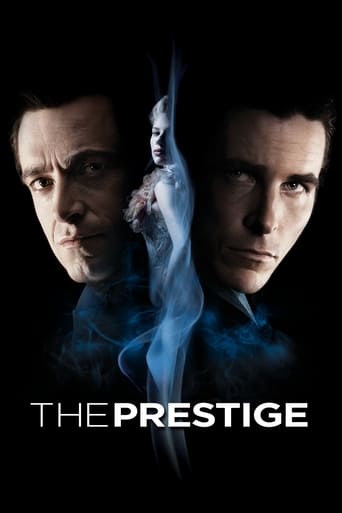
RECAPRUSH MOVIE GUIDE
The Prestige (2006)
Directed by Christopher Nolan
A mysterious story of two magicians whose intense rivalry leads them on a life-long battle for supremacy -- full of obsession, deceit and jealousy with dangerous and deadly consequences.
Overview, poster, and credits from TMDB.
Read and watch our full movie recap ↓FROM THE RECAPRUSH LIBRARY · FULL MOVIE RECAP
The Prestige (2006) Recap & Ending Explained: Why Borden’s Sacrifice Is the Trick Angier Cannot Understand
14 min read · Estimated reading time— views
Intro + RecapRush Viewpoint
Two men walk onto a stage, and each promises to make the impossible look effortless. Behind the curtain, however, Robert Angier and Alfred Borden are not really competing over technique. They are competing over who can suffer more—and who can make the other man pay for it.
Christopher Nolan’s The Prestige is built like the magic trick it describes: the pledge introduces two rival illusionists, the turn fractures chronology and identity, and the prestige returns what appeared to be lost. Yet the final revelation does more than solve a puzzle. It exposes two radically different ideas of sacrifice. Borden divides one life between two brothers; Angier repeatedly destroys a life so that an audience can applaud its replacement.
RecapRush viewpoint: the decisive difference is not that Borden has a “better” secret. It is that he understands a trick must be lived before it can be performed. Angier wants the same result without accepting the same kind of surrender, so he turns science into an industrialized act of murder. The film’s cruelest irony is that both men achieve the prestige they wanted only after losing almost everyone who could have made the achievement matter.
> Spoiler warning: This article reveals the entire plot, both central twists, the ending, and the fate of the main characters.
Featured Image
Table of Contents
Quick Facts
- Title: The Prestige
- Release date: October 19, 2006
- Runtime: 130 minutes
- Director: Christopher Nolan
- Screenplay: Jonathan Nolan and Christopher Nolan
- Based on: Christopher Priest’s novel The Prestige
- Genres: Drama, Mystery, Science Fiction
- TMDB ID: 1124
- Principal cast: Hugh Jackman, Christian Bale, Michael Caine, Piper Perabo, Rebecca Hall, Scarlett Johansson
- Article type: Released-film recap and ending analysis
Full Spoiler Recap
1. A death inside the trick
The film begins near its end. Alfred Borden watches Robert Angier perform a version of “The Transported Man.” Angier appears beneath Tesla’s electrical machine, vanishes through a trap door, and falls into a locked water tank. Borden rushes to the tank but cannot free him. Stage engineer John Cutter testifies that Borden was responsible for Angier’s death, and Borden is convicted of murder.
The chronology then folds backward through diaries, testimony, and memory. Before they become famous enemies, Borden and Angier work as assistants for another magician. Angier’s wife Julia performs a water-escape illusion. Borden ties her wrists, but when Julia is lowered into the tank she cannot escape the knot. The emergency axe arrives too late. Julia drowns in front of Angier.
Angier becomes convinced Borden tied a more dangerous knot. Borden says he does not know which knot he used. The uncertainty matters: it makes grief impossible to close. Angier no longer seeks an explanation; he needs Borden to carry a guilt as permanent as his own loss.
2. Rival magicians turn grief into warfare
The men establish separate acts. Borden builds his identity as “The Professor,” assisted by the quiet, heavily disguised Fallon. He marries Sarah, and they have a daughter, Jess. Angier becomes the polished “Great Danton,” with Cutter designing his illusions and Olivia Wenscombe assisting him onstage.
Their rivalry quickly abandons professional boundaries. Angier sabotages Borden’s bullet-catch trick and shoots off two of Borden’s fingers. Borden retaliates during Angier’s bird-cage illusion, causing a public injury and humiliating the act. Each attack is framed as repayment, but every repayment produces a new debt.
At home, Sarah senses that Borden’s affection is inconsistent. On some days he seems completely devoted; on others he feels emotionally absent. He insists that his work requires secrecy, while she realizes the secrecy has entered their marriage. What looks at first like moodiness is one of the film’s fairest clues.
3. The original Transported Man
Borden unveils an astonishing trick. He enters one cabinet and appears almost instantly in another. Cutter correctly suspects the use of a double, but Angier refuses to accept such an ordinary answer. He watches Borden’s performance and becomes fixated on the applause at its conclusion.
Angier hires Gerald Root, an actor who resembles him, and stages his own version. The illusion works mechanically: Angier disappears below the stage while Root receives the audience’s ovation elsewhere. But Angier cannot tolerate being the unseen man beneath the floor. He wants both authorship and applause.
Borden exploits the weakness, exposing Root and ruining Angier’s act. Angier then sends Olivia to steal Borden’s secret. Instead, she falls in love with Borden and gives Angier a coded diary that appears to reveal a connection to inventor Nikola Tesla.
4. Tesla’s impossible machine
Angier travels to Colorado Springs and asks Tesla to build the machine he imagines Borden used. The clue is a deliberate misdirection, yet it leads to a real impossibility. Tesla’s device does not transport an object. It duplicates it. A hat placed beneath the machine remains where it is while an identical hat appears at a distance; later, Angier finds a field of duplicates.
Tesla warns Angier to destroy the machine. Angier instead recognizes the means to create the perfect spectacle. His choice marks the story’s deepest moral collapse: he finally learns that Borden’s secret was not technology, yet he embraces technology because it can manufacture the effect he craves.
Meanwhile, the strain of Borden’s divided life destroys Sarah. She knows that part of what she experiences is real, but she cannot reconcile the days when her husband loves her with the days when he does not. Borden will not reveal the truth. Sarah dies by suicide, leaving Jess and one Borden brother with a grief their secret helped create.
5. The Real Transported Man
Back in London, Angier launches a limited run of “The Real Transported Man.” Each evening, he steps into Tesla’s machine. Electricity fills the stage. One Angier drops through a trap door into a locked tank while another appears at the rear of the theater and receives the applause.
Angier arranges the show so the backstage machinery is removed after each performance. He invites Borden’s curiosity and knows his rival will eventually investigate. During the final performance, Borden goes beneath the stage and finds Angier drowning. He tries to break the tank open, but the police arrive at the exact moment required to make him look guilty.
Borden is tried and sentenced to death. A solicitor offers a bargain from the wealthy Lord Caldlow: surrender the secret of the Transported Man, and Caldlow will provide for Jess. When Borden finally meets him, he discovers that Caldlow is Angier—alive, aristocratic, and in control of his daughter’s future. Angier tears up Borden’s written secret. He does not want knowledge anymore; he wants victory.
6. One Borden dies, another returns
Borden says goodbye to Fallon and is hanged. The execution appears to end the rivalry. Cutter, however, has learned that Caldlow is Angier and realizes he helped an obsession consume innocent people. He returns Jess to the surviving man who has been hiding as Fallon.
In the theater basement, “Fallon” confronts Angier and shoots him. He removes the disguise and reveals the truth: Alfred Borden was never one man. Identical twin brothers shared the identity. One brother lived as Borden while the other lived as Fallon; then they exchanged roles. One loved Sarah, the other loved Olivia. When one lost fingers, the other removed the same fingers to preserve the illusion.
Angier admits that Tesla’s machine created a duplicate each night. A trap door dropped one version into a tank while the other appeared before the audience. He could never know whether he would be the man in the prestige or the man drowning below the stage. Still, he performed the act repeatedly.
As Angier dies and the theater burns, the surviving Borden walks past rows of tanks. Inside them are drowned versions of Angier. He returns to Jess, completing the film’s final prestige: the father the audience thought lost reappears, although he is not the same twin who went to the gallows.
Cast + TMDB
Cast and Characters


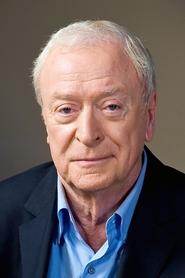




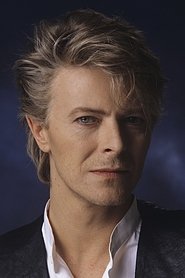


The cast and character gallery below is generated from TMDB’s credited records for movie ID 1124. Each available portrait links to the performer’s RecapRush profile.
Ending Explained
Was Alfred Borden one person?
No. “Alfred Borden” is a shared identity performed by identical twins. When one brother appears as Borden, the other becomes Fallon through makeup, costume, and physical concealment. Their switching explains Sarah’s observation that Borden loves her sincerely only on certain days. One twin loves Sarah; the other loves Olivia.
The trick also explains Borden’s refusal to describe the knot used on Julia. The twin being questioned may genuinely not know what his brother tied. The line is not merely evasive; it protects the shared identity while exposing the emotional cost of living only half a life.
More from RecapRush
 The Weight (2026) Recap & Ending Explained: Why Samuel Bargains With Clancy Instead of Killing Him
 KPop Demon Hunters (2025) Recap & Ending Explained: Why Rumi’s Truth Creates a Stronger Honmoon
 The Scandal (2026) Recap & Ending Explained: Why Hui-yeon’s Survival Matters More Than Cho Won’s Last Letter
Which Borden twin is executed?
The film distinguishes the brothers chiefly through their relationships rather than separate names. The twin who loves Olivia is the one executed, while the twin who loves Sarah survives, kills Angier, and reunites with Jess. The movie keeps their individual biographies deliberately submerged because both men sacrificed the right to a separate public self.
Does Tesla’s machine teleport Angier?
What the film shows is duplication, not simple teleportation. The machine leaves one Angier in place and creates another at a distance. Angier’s stage design then determines the apparent trick: one body falls into a sealed tank and drowns; the other appears among the audience.
The film does not provide a scientific mechanism, and it never definitively labels either body as the metaphysical “original.” Angier himself cannot know which experience awaits him when he activates the machine. That uncertainty is central to the horror.
Did Borden murder Angier in the tank?
No. Borden discovers the drowning Angier and attempts to save him. Angier has constructed the circumstances so Borden will be found at the tank and blamed. Another Angier—the duplicate created during that performance—continues living as Lord Caldlow and visits Borden in prison.
Why are there many tanks at the end?
Each tank contains a drowned Angier from a performance of the Real Transported Man. The rows confirm that the act was not a one-time experiment. Angier repeatedly accepted that one version of himself would die so another could receive applause. The accumulation transforms a brilliant illusion into evidence of ritualized self-destruction.
Who wins?
Neither man wins in any meaningful sense. The surviving Borden regains Jess, which gives him a future, but his brother and Sarah are dead. Angier achieves the greatest spectacle of his career but dies surrounded by the bodies created to sustain it. The rivalry has produced technical triumph and human ruin.
RecapRush Interpretation
The central conflict is often described as sacrifice versus obsession, but the film draws a sharper distinction: Borden sacrifices continuity, while Angier sacrifices consequence.
The Borden brothers accept that neither can possess a whole biography. Every romance, wound, fatherhood moment, and professional success must be divided. Their method is ethically damaging—especially to Sarah—but it has a coherent discipline. The trick exists because they never step outside it.
Angier wants the wonder without surrendering the star position. Root initially gives him a safe method, but it forces him beneath the stage while someone else bows. Tesla’s machine solves that wounded vanity by producing another Angier, yet the solution requires him to treat a conscious self as disposable. He does not transcend Borden’s sacrifice; he hides murder inside spectacle.
The final reunion with Jess is therefore more than sentimental closure. It is the only prestige in the film that restores a human relationship rather than an entertainer’s status. Borden’s last act is not performed for a crowd. It is performed for his daughter.
Deep Analysis & Key Themes
The pledge, the turn, and the prestige
Cutter’s three-part description of magic is the film’s narrative blueprint. The pledge gives us apparently ordinary men. The turn makes identities disappear: Angier dies, Borden is executed, and diaries replace reliable chronology. The prestige returns them in altered form. The structure trains us to look for mechanism, then uses our appetite for a solution to make us overlook the bodies required to produce it.
Obsession disguises itself as grief
Angier’s initial rage grows from Julia’s death, but revenge gradually becomes a defense against mourning. If Borden remains the cause of everything, Angier never has to accept that Julia’s death may not yield a satisfying answer. Competition gives pain a target and a schedule.
Borden’s obsession works differently. He does not need public elegance; he needs the purity of the secret. That devotion allows the brothers to create an extraordinary illusion, but it also prevents the surviving twin from telling Sarah enough to save their marriage. Professional discipline becomes moral cowardice.
Doubles, birds, and the price of wonder
Early in the film, a disappearing-bird trick quietly explains everything. One bird appears to vanish; another bird is presented as its return. A child understands that the first bird has been crushed. Adults accept the prestige because they prefer wonder to the mechanism.
Borden’s twin and Angier’s duplicates are extensions of the same image. In Borden’s version, the hidden double lives but loses an independent identity. In Angier’s version, the hidden double dies. The audience sees only the triumphant return.
Diaries as staged performances
Both men read diaries that were written partly to manipulate the reader. The apparent confession is another stage. The non-linear structure makes viewers occupy the same position as the rivals: we treat private writing as truth because it feels intimate, only to discover that intimacy can be engineered.
Class and authorship
Angier’s wealth lets him purchase machinery, identity, legal power, and custody leverage. Borden’s trick depends on bodily labor and lifelong concealment. Their methods reflect their social positions: one buys an impossible apparatus and a theater full of tanks; the other turns his body and family into the apparatus.
The audience is part of the trick
The film repeatedly tells us that spectators want to be fooled. That does not mean viewers are unintelligent. It means emotional desire outruns forensic attention. We want Angier’s impossible transport to be real, so we discount the trap door. We want one Borden, so we reinterpret contradictory behavior as personality. Nolan’s construction makes the reveal feel surprising even when the clues have been visible all along.
What Most Viewers Missed
- Sarah’s “today you love me” observation is literal. She is responding to two different men, not one inconsistent husband.
- The bird trick is a miniature of the ending. The returned bird is a replacement, while the hidden cost remains out of sight.
- Borden’s uncertainty about Julia’s knot can be honest. The brother speaking may not be the brother who tied it.
- The missing fingers prove the scale of the twins’ commitment. The uninjured brother mutilates himself so that both bodies can continue playing one identity.
- Tesla is a successful misdirection. Borden never needed a Tesla machine, but his false clue sends Angier toward a machine that really works.
- Angier’s title matters. Lord Caldlow is not just another disguise; it reveals the wealth and institutional power he kept behind the theatrical persona.
- The ending’s emotional prestige belongs to Jess. The film closes its moral argument by returning a parent, not by returning a performer to the stage.
Mid/Post-Credits
There is no mid-credits or post-credits scene in The Prestige. The story ends with the theater, the tanks, and Cutter’s concluding description of the prestige; viewers do not need to wait through the credits for an additional narrative beat.
Final Thoughts
The Prestige lasts because its solution deepens the tragedy instead of merely closing the puzzle. Once we know the truth, almost every important scene changes. Borden’s inconsistency becomes divided identity. Angier’s triumph becomes repeated execution. The apparent supernatural contest becomes a study of two men who confuse devotion with the destruction of limits.
Borden survives because one brother finally chooses a relationship over the act. Angier fails because even at the end, he still measures meaning by the faces in the audience. The better magician is not the man with the more advanced machine. It is the man who understands that every convincing wonder hides a cost—and that some costs should never be paid.
FAQ
What is the main twist in *The Prestige*?
Alfred Borden is an identity shared by identical twins, while Angier’s Real Transported Man uses Tesla’s machine to create duplicates, one of whom drowns during each performance.
Is Fallon Borden’s twin?
Yes. Fallon is the disguised identity used by whichever twin is not currently performing as Alfred Borden.
Why does Angier frame Borden?
Angier wants final revenge and constructs the last performance so Borden will be discovered beside a drowning body. The surviving duplicate then continues as Lord Caldlow.
Did Angier know whether he would drown?
No. He explains that he faced the machine without knowing whether he would become the man receiving applause or the man trapped in the tank.
Why does Sarah die?
Sarah is devastated by the contradictory affection and secrecy produced by the twins’ shared identity. Unable to obtain the truth or emotional stability, she dies by suicide.
Does Borden get his daughter back?
Yes. Cutter returns Jess to the surviving Borden twin after turning against Angier.
Is *The Prestige* based on a book?
Yes. The film is adapted from Christopher Priest’s 1995 novel, although the film changes important aspects of the story and ending.
Does *The Prestige* have a post-credits scene?
No. There are no additional scenes during or after the credits.
Join the conversation
What did you think of the ending? Share your interpretation. Spoilers may appear below.
This product uses the TMDB API but is not endorsed or certified by TMDB.
No comments yet. Start the conversation.