
RECAPRUSH MOVIE GUIDE
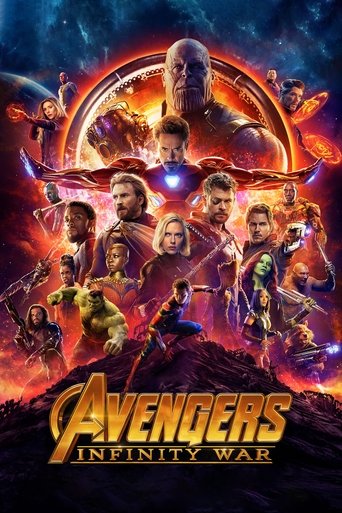
Avengers: Infinity War (2018)
Directed by Anthony Russo, Joe Russo
Thanos pursues all six Infinity Stones as the Avengers and their allies attempt to protect the lives and worlds caught in his path.
Overview, poster, and credits from TMDB.
Read and watch our full recap ↓FROM THE RECAPRUSH LIBRARY · FULL RECAP
Avengers: Infinity War (2018) Recap & Ending Explained: When Saving Someone Is Not Enough
13 min read · Estimated reading time— views
Intro + RecapRush Viewpoint
The Avengers are used to making impossible rescues. Avengers: Infinity War gives them a crisis in which saving the person in front of them can leave someone else exposed. Thanos advances through those conflicts, forcing characters to choose under conditions he controls.
The RecapRush viewpoint: the film’s deepest conflict concerns who has the right to decide that another person is expendable. Its villain calls his project a necessary sacrifice. Its heroes struggle to protect particular lives while recognizing a danger to everyone. The ending does not simply declare one side’s philosophy correct; it shows what happens when one person gains the power to impose his answer on the universe.
This is a full-spoiler recap of the released 2018 film, including its post-credits scene. It does not import Avengers: Endgame’s explanations, reversals or later outcomes. The recap is factual; passages marked as interpretation are original RecapRush analysis.
Featured Image
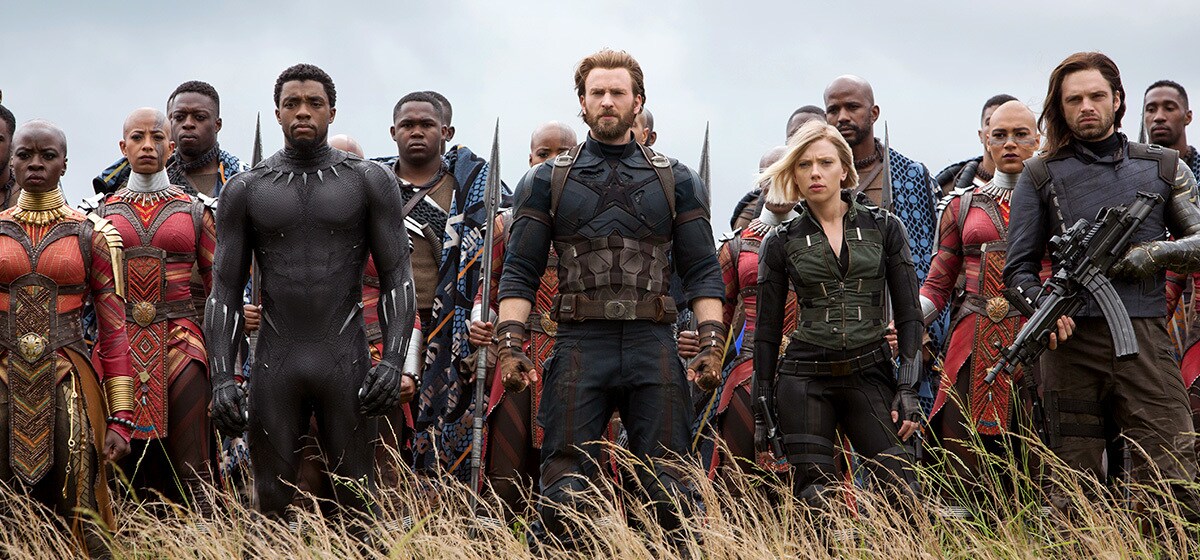
Table of Contents
Quick Facts
- Exact title / year: Avengers: Infinity War / 2018
- Directors: Anthony Russo and Joe Russo
- Screenplay: Christopher Markus and Stephen McFeely
- Producer: Kevin Feige
- Original US theatrical release: April 27, 2018
- Runtime / US rating: 149 minutes / PG-13
- Genres: action, adventure, science fiction
- Collection position: #8 in RecapRush’s fixed October 29, 2026 Worldwide lifetime box-office snapshot, separate from the weekly domestic chart
Disney’s official film page verifies the US release, runtime and principal credits. The TMDB-attributed catalogue and Wikidata independently match the exact 2018 film to 299536. Territorial opening dates differ; the date above is specifically the US release. No current gross figure is displayed here. [1, 2, 3, 4]
Full Spoiler Recap
1. The warning arrives after a defeat
Thanos attacks the Asgardian refugee ship with the Power Stone already in his possession. He defeats Hulk, obtains the Space Stone from the Tesseract and kills Loki. Heimdall sends Banner to Earth before he too is killed. Thor survives the ship’s destruction. [5]
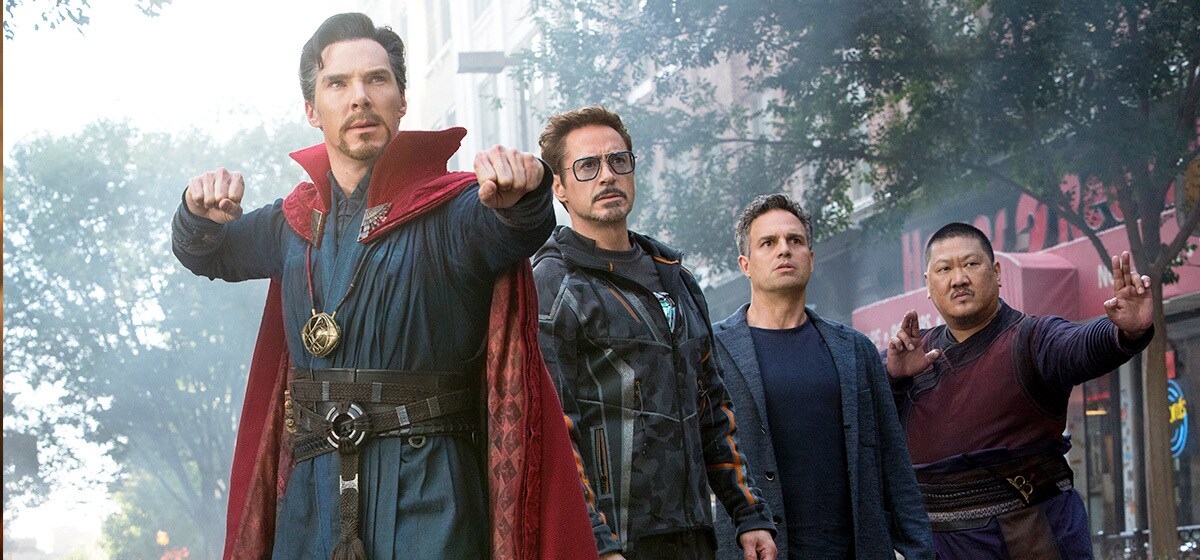
Banner’s arrival warns Doctor Strange, Wong and Tony Stark. Thanos’s forces attack New York for the Time Stone; Ebony Maw takes Strange aboard his ship. Tony and Peter Parker follow, then rescue Strange. [5]
2. The heroes divide the work
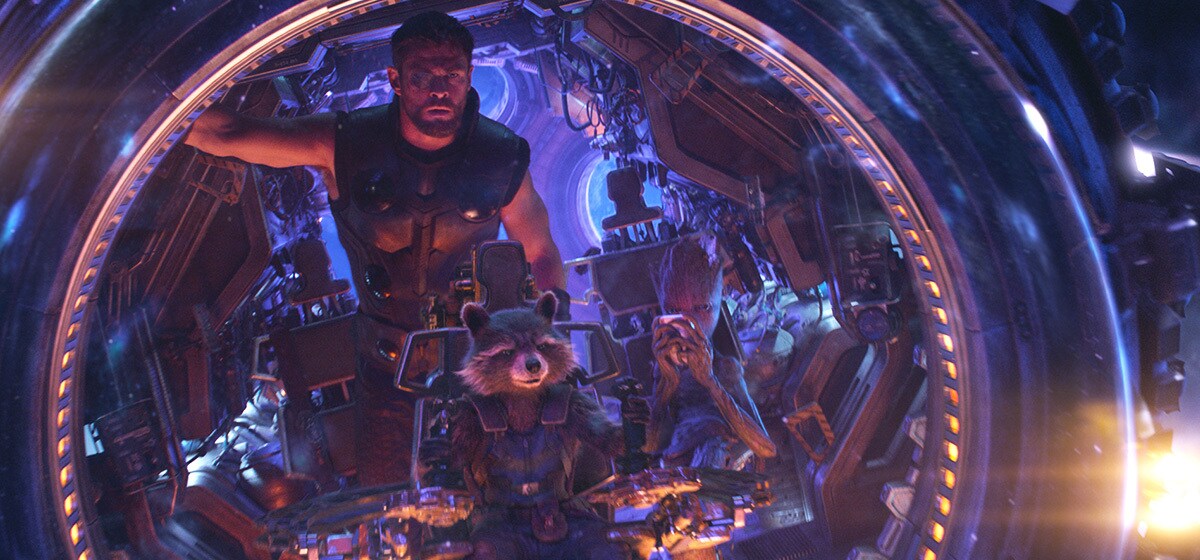
The Guardians find Thor. He takes Rocket and Groot to Nidavellir, where Eitri helps forge Stormbreaker; Groot provides its handle. The other Guardians seek the Reality Stone on Knowhere, but Thanos has already taken it and captures Gamora. [6]
On Earth, Steve Rogers and his allies rescue Wanda and Vision from an attack. They bring Vision to Wakanda, hoping Shuri can remove the Mind Stone without killing him. [5]
3. Thanos turns attachment into leverage
Thanos tortures Nebula to make Gamora reveal the Soul Stone’s location. On Vormir, Red Skull explains its price: the loss of someone the seeker loves. Thanos throws Gamora to her death and receives the Stone. [6]
The transaction works within the film’s supernatural rules. It does not establish that Gamora consents to it or that her death is morally justified.
4. Titan offers a narrow chance
Tony, Peter and Strange meet the Guardians on Titan. Strange examines possible futures and reports only one victory. Their attempt to remove Thanos’s Gauntlet nearly succeeds, but Quill’s discovery of Gamora’s death breaks the group’s control. Thanos wounds Tony; Strange gives up the Time Stone in exchange for Tony’s life. [6]
5. Wakanda’s defense cannot stop the last exchange
The defenders hold off Thanos’s army while Shuri works. Banner uses Hulkbuster armor; Thor, Rocket and Groot arrive with Stormbreaker. The attempt to save Vision fails. Wanda destroys the Mind Stone and Vision, but Thanos reverses that moment with the Time Stone, then tears the restored Stone from Vision’s forehead. [5]
Thor strikes Thanos with Stormbreaker. The wound does not prevent Thanos from snapping his fingers. [6]
6. The villain completes his objective
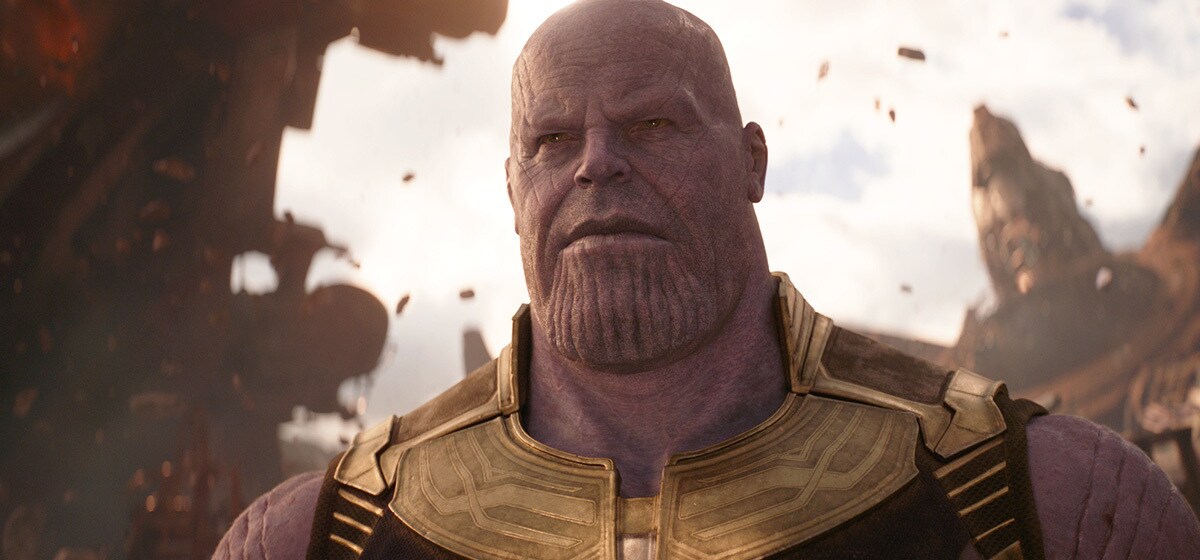
The Snap eliminates half of life in the universe. Peter, Strange, Bucky, T’Challa, Wanda and other heroes disintegrate. The survivors cannot understand or immediately undo what has happened. Tony and Nebula remain on Titan; the surviving defenders are left in Wakanda. Thanos withdraws and watches a sunrise. [5, 7]
This is not an interrupted attempt to complete the Gauntlet. The screenwriters explicitly distinguish the finished act from a cliffhanger that would merely postpone whether it happens. [7]
Cast + TMDB
Cast and Characters










Principal performers and roles are verified against Disney’s official cast list and the exact TMDB-attributed film catalogue. This selection follows the characters central to the recap, rather than presenting the entire ensemble as a ten-person cast. [1, 2]
- Robert Downey Jr.: Tony Stark / Iron Man
- Chris Hemsworth: Thor
- Chris Evans: Steve Rogers / Captain America
- Josh Brolin: Thanos
- Mark Ruffalo: Bruce Banner / Hulk
- Benedict Cumberbatch: Doctor Strange
- Tom Holland: Peter Parker / Spider-Man
- Zoe Saldaña: Gamora
- Paul Bettany: Vision
- Elizabeth Olsen: Wanda Maximoff
The film also features Scarlett Johansson, Chadwick Boseman, Chris Pratt, Don Cheadle, Karen Gillan and many other returning performers. Anthony and Joe Russo direct from a screenplay by Christopher Markus and Stephen McFeely. Exact film record: Avengers: Infinity War — TMDB movie 299536. [1, 2]
Ending Explained
Did Thanos really win?
Yes, within this film. He completes the Gauntlet and carries out the Snap. His final scene depicts the rest he believes he has earned. It does not reveal a secret victory already achieved by the Avengers. [7]
RecapRush interpretation: the sunrise is unsettling because the familiar visual language of completion belongs to the person who has inflicted the catastrophe. Calm is not proof that the universe has become just. It tells us that Thanos can regard his project as finished without confronting the people who must live inside its consequences.
This makes the ending more than a surprise loss. The film lets his certainty occupy the screen after the heroes’ ability to act has collapsed. The quiet offers no reassurance simply because it resembles the end of a successful quest.
Are all the deaths caused by the Snap?
No. Loki, Heimdall, Gamora and Vision die through separate acts before the Snap; the disintegrations are a later event. Episode-specific discussion should preserve that distinction. [5, 6]
The film does not provide a complete mechanism for reversing either category. Its 2018 ending shows losses, survivors and unanswered questions. What later films do with those questions is outside this article’s scope.
Why does Doctor Strange surrender the Time Stone?
He trades it for Tony’s survival after having seen possible futures. The sequence strongly invites a connection between those facts. It does not reveal the full content of the successful future or establish every step that might lead there. [6]
Our interpretation: Strange changes the terms of his responsibility, but the audience is not allowed to audit the reasoning. That creates a troubling form of trust. Tony receives another chance to live without receiving an explanation of what the chance will demand.
More from RecapRush
 Sinners (2025) Recap & Ending Explained: Why Sammie Chooses Music Over Immortality
 Resident Evil (2026) Recap & Ending Explained: Does Bryan Ever Get the Cure?
 The Man with the Bag (2026) — Official Teaser & Movie Preview
It would overstate this film to describe a detailed plan confirmed by subsequent events. Here, the decision remains a deliberate gap between the knowledge a character claims and the knowledge the viewer possesses.
Why does destroying Vision’s Stone fail?
Wanda’s act is undone locally when Thanos uses the Time Stone. He then removes the restored Mind Stone, completing his collection. [5]
RecapRush interpretation: this is the ending’s cruelest answer to the idea that accepting a terrible cost necessarily buys a desired outcome. Wanda does what she had resisted doing. The film refuses to reward the decision with certainty or control. The scene should not be read as a simple lesson that she ought to have acted without hesitation; it shows how little freedom remains when an aggressor can rewrite the immediate terms of a choice.
Deep Analysis & Key Themes
A cost is not the same as consent
Thanos repeatedly measures the seriousness of his purpose through what it costs him. That is an incomplete moral accounting. A person can feel grief while still giving himself authority over someone else’s life.
RecapRush interpretation: Gamora’s role exposes the difference between sacrificing one’s own interests and sacrificing another person. The villain’s pain does not make those acts equivalent. His emotional attachment makes the loss matter to him; it cannot turn his victim into a willing participant.
This distinction is central to resisting the seduction of his argument. A committed person is not necessarily a justified person. The intensity of an emotion tells us something about the person experiencing it, but does not settle the rights of everyone affected by the action that follows.
The rescue instinct has a political limit
A superhero story encourages us to care about the endangered individual. The appeal is ethical as well as dramatic: a person should not become disposable merely because protecting them is inconvenient.
Infinity War puts that instinct under pressure without making indifference an attractive alternative. A decision made for the person nearby can affect people too distant to appear in the frame. Yet allowing one decision-maker to convert everyone into a calculation is precisely the danger the heroes face.
Our reading is that the film stages this problem rather than solving it. Its defeat does not prove that compassion was the mistake. Nor does the sincerity of the heroes’ motives guarantee that every choice was wise. The discomfort comes from needing judgment while lacking the power or information to secure the outcome.
Thor’s progress creates an expectation the film can break
A quest for a weapon gives a large ensemble story a clean line of anticipation. Work toward the tool; endure the trial; return with the means to change the battle. The audience understands how to watch that progression.
Our interpretation: the structure encourages us to treat preparation as a promise. When the anticipated intervention arrives, it feels as if the narrative has delivered the missing answer. The ending reveals that an intervention can be spectacular and still insufficient.
That does not make the effort meaningless. It challenges the expectation that heroism must become reliable because it has been earned through suffering. Experience and resolve increase what a character can do; they do not make the world contractually obliged to reward it.
The ensemble is divided by knowledge as well as distance
The teams cannot simply pool all their strengths at the right moment. They are acting from different locations, with different pieces of information and different relationships to the threat. A cosmic crisis reaches them as several urgent local problems.
For RecapRush, this is a useful way to understand the film’s cross-cutting. The suspense does not depend only on who is strong enough. It depends on whether one group’s assumptions will still hold after something changes elsewhere. The viewer can see connections that the characters cannot communicate in time.
The result is a form of tragedy built from partial competence. Many characters solve an immediate problem correctly without being able to solve the larger system of problems. Their limitations are not interchangeable with a lack of courage.
The final silence removes the comfort of momentum
Large action films often provide another task as soon as one confrontation ends. Movement itself becomes reassurance: there is still a lever to pull, a pursuit to begin or a plan to announce.
Our interpretation is that Infinity War’s final quiet interrupts that habit. It gives the survivors no immediate activity large enough to absorb the shock. The pause makes the consequences present rather than turning them instantly into fuel for the next mission.
That restraint is one reason the ending matters independently of a sequel. A continuing franchise can promise another chapter; this particular chapter still requires its loss to be acknowledged before the audience moves on.
What Most Viewers Missed
These are original interpretive connections to revisit, not claims that hidden details confirm later outcomes.
- The villain’s vocabulary should be examined, not adopted. Calling an act necessary is an argument made by a character. The film’s depiction of his conviction does not require the viewer to endorse the argument.
- The groups are running on different clocks. Distance matters less than the inability to know when another team’s situation has changed. Watch how local urgency repeatedly overwhelms a shared perspective.
- A successful rescue can coexist with a larger failure. The story resists the comforting assumption that a series of brave individual actions will automatically add up to victory.
- Grief does not distribute responsibility neatly. Quill’s response can be consequential without reducing the entire catastrophe to a single emotional mistake. An aggressor’s plan remains the aggressor’s responsibility.
- The sunrise is a statement of viewpoint. It gives the victor a feeling of completion. That feeling is not a neutral assessment of what he has done.
Mid/Post-Credits
There is one story scene after the credits. Nick Fury and Maria Hill encounter the expanding disruption on Earth. Hill disintegrates; Fury activates a communication device before he also disappears. The device displays a star insignia associated with Captain Marvel. [8, 9]
The scene sends a distress signal. It does not show Captain Marvel arriving or explain how the catastrophe will be reversed. There is no additional story scene during the main credits according to the credits listing. [8]
Final Thoughts
Infinity War is powerful because it makes the failure of rescue feel personal without making the universe small. It asks viewers to care about familiar faces, then leaves those who remain with an event they cannot immediately comprehend or repair.
The ending should not be mistaken for the film endorsing Thanos’s certainty. RecapRush’s reading is the opposite: his peace becomes frightening when set beside the lives his argument excludes. The chapter ends with his objective achieved and the moral argument still unresolved for everyone forced to bear its consequences.
Join the conversation
What did you think of the ending? Share your interpretation. Spoilers may appear below.
This product uses the TMDB API but is not endorsed or certified by TMDB.
No comments yet. Start the conversation.