
RECAPRUSH MOVIE GUIDE
Killer Whale (2026)
Directed by Jo-Anne Brechin
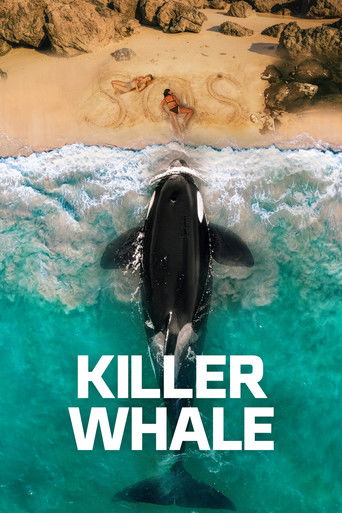
Follows best friends Maddie and Trish as they find themselves trapped in a remote lagoon with the dangerous killer whale named Ceto.
Overview, poster, and credits from TMDB.
Read and watch our full recap ↓FROM THE RECAPRUSH LIBRARY · FULL RECAP
Killer Whale (2026) Recap & Ending Explained: Why Maddie Leaves One Seat Empty
18 min read · Estimated reading time— views
Intro + RecapRush Viewpoint
The most frightening thing in Killer Whale is not that an orca remembers captivity. It is that Maddie discovers her best friend has been carrying a secret just as dangerous as the animal circling their rock. One threat waits under the water; the other has been sitting beside her for a year.
Jo-Anne Brechin’s 2026 aquatic survival thriller initially looks built for a simple contest between two stranded women and Ceto, an orca released from a brutal marine park. Yet the movie keeps turning physical traps into moral ones. Maddie cannot swim to safety without entering Ceto’s territory. She cannot accept Trish’s help without confronting the fact that Trish helped create the tragedy from which this vacation was meant to heal her.
The RecapRush viewpoint: Ceto is the film’s visible monster, but the ending refuses to make her the story’s original villain. Human beings confine the animal, exploit her as entertainment, and then release her without repairing the damage. Trish similarly tries to manage the consequences of a crime she set in motion without telling Maddie the truth. Maddie survives when she stops waiting for either trauma to become fair. The empty concert seat is not a neat symbol of forgiveness. It is evidence that grief can remain present without occupying every place in a survivor’s life.
Full spoilers ahead. This article covers the complete released film, including Chad’s death, Trish’s confession, Josh’s attack, Ceto’s pursuit, Trish’s sacrifice, Maddie’s rescue, and the final concert. Plot facts were checked against official release information and multiple post-release sources on October 28, 2026. The psychological and thematic readings are RecapRush’s interpretation unless explicitly attributed.
Featured Image

Table of Contents
Quick Facts
- Title / year: Killer Whale (2026)
- Director: Jo-Anne Brechin
- Writers: Jo-Anne Brechin and Katharine McPhee
- Principal cast: Virginia Gardner, Mel Jarnson, Mitchell Hope, Isaac Crawley
- US release: January 16, 2026, in select theaters and on Digital and On Demand through Lionsgate
- Earliest verified public release: January 16, 2026; no earlier festival premiere was established in the checked official and industry records
- Runtime: 89 minutes
- TMDB identity: Movie 1412598
- All current TMDB genres: Thriller, Horror, Action
- Production identity: Australian–American survival thriller produced by Jaggi Entertainment and filmed with extensive tank, set, practical-creature and digital work in Australia
- Coverage: complete released film, with major spoilers throughout
Full Spoiler Recap
1. A robbery leaves Maddie alive but unable to move forward
Maddie is an ambitious cellist working at a diner while trying to build a musical future. Chad, the young man who cares for her, is there when a masked robber attacks. The confrontation goes catastrophically wrong. Chad dies protecting Maddie, and a gunshot damages Maddie’s hearing.
The loss changes more than her body. Maddie survives with hearing aids, but music now carries the memory of the moment her old life broke apart. Her grief is complicated by survivor’s guilt: Chad died while she lived, and the career they believed in now feels bound to his absence.
One year later, her college friend Trish arranges a trip to Thailand. Trish is energetic, social-media fluent, and eager to make the vacation feel restorative. Maddie is quieter and resistant to being pushed toward a ready-made recovery. Their contrast looks like a familiar friendship dynamic. The film will later reveal that Trish’s enthusiasm is also an attempt to compensate for a secret.
2. Ceto’s captivity turns a tourist attraction into a warning
Trish wants to visit Ceto, an orca held at a local marine attraction. Maddie refuses to pay a business that profits from captivity. She feels a bond with the animal, partly through memories connected to Chad, but she does not confuse affection with ownership.
After meeting Josh, an expatriate traveler, the group drinks and breaks into the water park. From behind the viewing glass, Maddie finally sees Ceto. The encounter is immediately corrupted by the institution surrounding it. A cleaner falls into the tank, and Ceto kills him.
The park responds by removing the problem from view. Ceto is released into the ocean. Freedom sounds humane, but the action is undertaken as disposal, not rehabilitation. An animal conditioned by confinement is placed into an unfamiliar environment without the film suggesting that anyone has addressed what captivity did to her.
3. A lagoon that looks open becomes another cage
The next day, Maddie, Trish, and Josh travel to a secluded lagoon. Local warnings describe the place as dangerous or haunted, but the trio treats the trip as an adventure. The geography is deceptive: wide water appears to promise freedom while rocks and distance make escape nearly impossible.
Ceto enters the lagoon and attacks the jet ski carrying Josh and Trish. Josh is killed. Trish reaches Maddie’s inflatable, and the two women fight their way toward a small rock formation. They must leave the raft and swim the final distance, injuring themselves as they climb out of the water.
The injuries matter because every later choice becomes more expensive. Maddie’s foot is pierced, Trish’s leg is cut, and both are exposed to salt, heat, hunger, and dehydration. Ceto controls the route between their rock and any possible refuge.

4. Survival strips the friendship down to its hidden debt
The women ration almost nothing because they have almost nothing to ration. They chew gum, share an oyster, and collect warm water from a plastic bag. They try to signal distant help and risk reaching toward Josh’s body to retrieve a small flashlight.
Time on the rock removes Trish’s ability to control the mood. Maddie carries Chad’s cremation stone, a physical reminder of the life and future that disappeared. Believing death may be near, she lets it fall into the water.
That act prompts Trish to reveal what she has concealed. She arranged the diner robbery because she needed money for her education-related debt. She says she did not intend for the robber to be armed and never meant for Chad to die or Maddie to lose her hearing.
The confession does not make the tragedy an accident in the way Trish wants. She may not have chosen every consequence, but she chose the scheme that made those consequences possible. The vacation, her encouragement, and her attention now look different: they were partly care and partly guilt management.
Maddie is furious. The person presenting herself as the guide back to life helped destroy the life Maddie had. Their isolation makes the revelation especially cruel because Maddie cannot create distance from Trish without entering water controlled by Ceto.
5. Trish chooses an action whose cost cannot be concealed
The next day, Trish forms a plan. She will swim toward the sandbar and draw Ceto’s attention while Maddie moves toward a safer position. Unlike the robbery, this plan does not hide risk from another person. Trish places the danger on herself.
The diversion works long enough for Maddie to move. A plane passes overhead, and Trish scratches an SOS into the sand. Rescue seems close, but the message does not save her. Ceto attacks and tears off her leg. Trish dies from blood loss.
Her final act does not erase Chad’s death. It does establish that, when forced to choose openly, she is willing to spend her own life to give Maddie a chance. The film leaves the moral arithmetic unresolved: sacrifice can prove love without canceling responsibility.

6. Silence changes Maddie’s relationship with the predator
Maddie is left alone. Her hearing-aid batteries fail, placing her in near silence as she watches the water. The device failure is not simply another disadvantage. It alters the sensory terms of the confrontation. She can no longer depend on the sounds by which a thriller normally warns its protagonist and audience.
Maddie addresses Ceto and recognizes the animal’s own history of injury and captivity. For a moment, the film allows coexistence rather than immediate combat. Maddie swims through the boundary of fear and reaches the sandbar. Ceto does not attack during that crossing.
On land, Maddie buries Trish. The burial prevents the story from treating her friend as disposable food for the creature-feature machinery. Trish’s betrayal and sacrifice remain joined in the person Maddie mourns.
7. The waterproof phone fails, and the cello becomes a weapon
Maddie remembers Trish’s waterproof phone and searches the submerged bag. The device seems like a final route to help, but it shuts down. Technology that was displayed confidently at the start cannot solve the last stage of survival.
Ceto approaches again. Whatever understanding passed between Maddie and the animal does not turn Ceto into a tame protector. Maddie retrieves the metal endpin from her cello equipment and drives it into Ceto’s eye. The orca retreats, audibly distressed.
Maddie’s action is defensive, but it is not framed as a triumphant extermination. Ceto survives the encounter. Maddie survives long enough to be found by a rescue helicopter after drifting in the water.
8. One empty chair keeps the ending honest
Months later, Maddie performs as a cellist. The concert confirms that hearing loss and trauma did not end her musical identity. It does not pretend she returned unchanged.
One audience seat is empty. The absence can hold more than one person: Chad, whose death pushed her away from music, and Trish, whose guilt, love, and sacrifice cannot be reduced to a single verdict. Maddie performs anyway. Her survival is not the disappearance of grief; it is the recovery of enough agency to make music beside it.
Cast + TMDB
Cast and Characters






The portrait gallery below the article header is generated from verified TMDB credits and links each available person record to a RecapRush profile. It includes Virginia Gardner as Maddie, Mel Jarnson as Trish, Mitchell Hope as Josh, Isaac Crawley as Chad, Scott James George as the Hooded Man, and Shinji Ikefuji as the Cleaner. These are credited roles, not an invented character list.
Gardner’s performance has the hardest structural task: Maddie must be physically limited without becoming passive. Her most decisive changes happen in how she interprets what surrounds her. Jarnson plays Trish as both caretaker and cause, preserving enough warmth that the confession damages the friendship rather than merely exposing a one-note villain. Hope’s Josh helps move the friends into the lagoon, while Crawley’s Chad remains emotionally present after his brief physical role ends.
More from RecapRush
 Mutiny (2026) Recap & Ending Explained: Why Cole Reed Becomes a Dead Man on Paper
 Free Solo (2018) Recap & Ending Explained: Why the Summit Does Not End the Question of Risk
 The Dog Stars (2026) Recap & Ending Explained: Why Hig Finds Hope After the Radio Betrays Him
Ending Explained
Does Maddie survive?
Yes. After stabbing Ceto in the eye with the cello endpin, Maddie remains afloat until a rescue helicopter reaches her. The later concert confirms that she returned home and resumed performing.
The ending does not claim that recovery restored her hearing or removed her trauma. It shows adaptation: she performs with the life and body she has now.
Why does Ceto let Maddie cross the water, then attack again?
The film shows a temporary pause rather than a permanent pact. Maddie acknowledges Ceto as another harmed being, enters the water, and crosses without being attacked. Later, when she retrieves the phone, danger returns and she defends herself.
RecapRush reads this shift as a refusal of two easy extremes. Ceto is neither a purely evil monster nor a magical friend who can be healed by human empathy. Captivity has shaped her behavior, but understanding the cause does not make proximity safe.
Why does Maddie stab Ceto with the cello endpin?
The phone fails and Ceto closes in, leaving Maddie with an object tied to the career she feared she had lost. She uses the endpin to injure the orca’s eye and stop the attack.
The object connects survival with music without turning violence into artistic inspiration. Maddie does not kill Ceto or conquer the ocean. She uses what belongs to her former identity to protect the possibility of a future one.
Was Trish responsible for Chad’s death?
Trish confesses that she planned the robbery to address her debt. She says she did not intend for the robber to carry a gun, kill Chad, or damage Maddie’s hearing. Legally and morally, the exact degree of responsibility may be debated, but the plot establishes that her decision initiated the chain of events and that she concealed it from Maddie.
Her sacrifice saves Maddie time and space. It does not retroactively make the robbery harmless or transform confession into absolution.
What does the empty seat mean?
The film does not label the seat for the audience. The clearest reading is memorial: Maddie performs in the presence of an absence. Because both Chad and Trish are central to the path that brought her there, the image can hold both losses.
That ambiguity is more emotionally precise than assigning the chair exclusively. Maddie’s music now contains grief, betrayal, gratitude, and survival at once.

RecapRush Interpretation
The following is RecapRush’s reading, not a claim about confirmed director intent. The lagoon functions as a shared prison. Maddie and Trish are trapped above the surface, while Ceto behaves as though open water is still captivity. Physical release has not given the animal a usable sense of freedom, just as a year of outward recovery has not freed Maddie from the diner.
Trish believes consequences can be managed through care. She arranges the holiday, encourages Maddie, and finally offers herself as a distraction. Those acts matter, but the confession shows the limit of care without truth. She has been trying to repair a relationship while withholding the information Maddie would need to decide what that relationship is.
Maddie’s survival therefore depends on reclaiming decisions. She chooses when to release Chad’s stone, whether to hear Trish’s confession, when to enter the water, when to fight Ceto, and finally when to perform again. The film’s most convincing recovery is not emotional purity. It is agency returned one choice at a time.
Deep Analysis & Key Themes
Captivity does not end when the gate opens
Ceto’s release creates the central threat because it treats freedom as a location rather than a condition. The park moves her from a tank to the ocean and assumes the problem is solved. The lagoon then resembles the enclosure she knew: stone boundaries, human figures at the edge, and no understood path into a stable social world.
Maddie is also technically free after the robbery. No one physically prevents her from returning to music, yet grief and altered hearing make the old future feel inaccessible. The parallel does not equate a human survivor with an animal. It lets the creature feature ask why removing an immediate source of harm is not the same as repairing what harm produced.
Guilt can imitate generosity
Trish’s holiday is a loving gesture. It is also built on withheld information. Her energy keeps trying to move Maddie toward a version of recovery that would relieve both women: Maddie would feel better, and Trish could believe she had made amends without being judged.
The confession exposes this contradiction. Trish’s care is not fake, but it is compromised by her need to control the terms on which Maddie receives it. Her final diversion differs because its cost and purpose are visible. Maddie knows the risk, and Trish cannot hide behind a better story about herself.
Hearing loss changes suspense from the inside
Aquatic horror already depends on limited perception: the surface conceals movement, distance is hard to judge, and danger can arrive from below. Maddie’s hearing loss adds another boundary without reducing her to that condition.
When the batteries fail, silence removes a conventional warning system. Yet the production’s emphasis on physical geography and visual attention supports Maddie’s adaptation. She survives through watching, deciding, and using what is at hand. Disability is part of her experience, not a late twist or a punishment that must be cured.
The cello endpin joins art and self-defense
The film begins with music as a damaged dream. It ends by making a component of the instrument physically useful before returning the instrument to performance.
That progression could be read too neatly if reduced to “music saves her.” The endpin wounds another traumatized being. Survival carries moral discomfort. The later concert does not celebrate the injury; it shows that Maddie can still choose what the instrument means after using part of it in desperation.
Nature is consequence, not courtroom
Ceto kills people who did not individually design her captivity. Trish dies after accepting responsibility for a different act. The film does not distribute suffering according to a fair moral score.
That unfairness matters. If Ceto attacked only guilty park owners and Trish’s sacrifice perfectly canceled Chad’s death, the story would operate like a simple punishment machine. Instead, cause and blame overlap imperfectly. Human exploitation creates danger, but danger does not become morally precise once released.
What Most Viewers Missed
The waterproof phone is introduced as confidence before it becomes failure
Trish shows off the device early. Later it appears to offer rescue, then shuts down when Maddie needs it. The reversal fits Trish’s larger pattern: she believes preparation and presentation can control consequences that are already beyond her.
The two enclosures mirror one another
The park tank is obviously a prison. The lagoon looks limitless, yet its rocks and currents trap both the women and Ceto in repeated confrontation. Visual openness becomes practical confinement.
Maddie does not receive a clean apology scene
Trish confesses under the possibility of death, and events accelerate before Maddie can decide what forgiveness would require. The movie protects the discomfort of that unfinished conversation. Grief after betrayal often includes mourning the chance to ask more questions.
Ceto survives
Maddie injures Ceto’s eye and escapes; the film does not establish that she kills the orca. That choice preserves the ecological theme. The final victory is separation and survival, not the destruction of the animal humans damaged.
The final performance is a change of posture, not a reset
Maddie does not return to the person she was before the diner. The empty chair keeps absence inside the image. Progress means performing with the loss still visible.
Mid/Post-Credits
One checked post-credit database states that Killer Whale has no end-credit scenes. The narrative ends with Maddie’s later performance and the empty audience seat; no verified mid-credits or post-credits sequel stinger is included in this article.
Final Thoughts
Killer Whale works best when it stops asking whether Maddie can outswim Ceto and asks what she will do with truths that cannot be repaired. The orca is dangerous because human beings turned captivity into damage and called release a solution. Trish is tragic because love arrives after deception and cannot make the original choice disappear.
The ending gives Maddie neither revenge nor uncomplicated forgiveness. It gives her a concert, an empty chair, and the ability to keep playing. That is a modest image, but it understands survival better than a triumphant kill would. Life after trauma is not the moment every threat becomes meaningful. It is the moment the survivor can make meaning without asking the threat for permission.
FAQ
When was Killer Whale released?
Lionsgate released it in the United States in select theaters and on Digital and On Demand on January 16, 2026. The checked records do not establish an earlier public festival premiere, so its earliest verified release year is 2026.
What is the exact TMDB ID?
It is TMDB movie 1412598. The canonical RecapRush article is therefore `https://recaprush.me/movie/1412598`.
What are Killer Whale’s TMDB genres?
TMDB lists Thriller, Horror, and Action. All three are stored with this article rather than replacing them with informal labels such as “creature feature.”
Who directed Killer Whale?
Jo-Anne Brechin directed the film and co-wrote it with Katharine McPhee.
Who survives the movie?
Maddie survives and returns to performing. Josh is killed during Ceto’s first lagoon attack, and Trish dies after Ceto tears off her leg during the attempted escape.
Why did Trish arrange the robbery?
She says she needed money connected to her educational debt. She did not intend the armed violence that followed, but she admits that the robbery was her plan.
Does Maddie kill Ceto?
No confirmed death is shown. Maddie stabs Ceto in the eye with a cello endpin, causing the orca to retreat. The film leaves Ceto alive within the established ending.
Is the final empty seat for Chad or Trish?
The film does not label it. It works as a memorial image that can hold both losses, while showing Maddie performing despite the absences that changed her.
Is there a post-credits scene?
No. A checked credit-scene database records no end-credit scene, and no separate stinger is included in the documented plot.
Join the conversation
What did you think of the ending? Share your interpretation. Spoilers may appear below.
This product uses the TMDB API but is not endorsed or certified by TMDB.
No comments yet. Start the conversation.