
RECAPRUSH MOVIE GUIDE
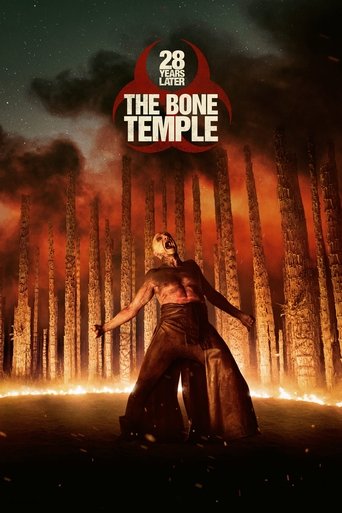
28 Years Later: The Bone Temple (2026)
Directed by Nia DaCosta
Dr. Kelson's study of the Alpha infected Samson may change the world, while Spike is trapped inside Jimmy Crystal's violent cult.
Overview, poster, and credits from TMDB.
Read and watch our full recap ↓FROM THE RECAPRUSH LIBRARY · FULL RECAP
28 Years Later: The Bone Temple (2026) Recap & Ending Explained: Why Kelson's Cure Matters More Than Jim's Return
20 min read · Estimated reading time— views
Intro + RecapRush Viewpoint
The most hopeful discovery in 28 Years Later: The Bone Temple arrives inside the body everyone else has stopped seeing as human. Dr. Ian Kelson looks at Samson—the towering Alpha infected who could tear him apart—and asks whether rage is an identity or an illness. Jimmy Crystal looks at frightened survivors and asks how fear can make them obedient.
Nia DaCosta's 2026 sequel continues directly from 28 Years Later, but it divides its nightmare into two competing forms of belief. Kelson builds a monument to the dead while cautiously treating one infected man. Crystal builds a cult that turns Satanic theater into permission for cruelty. Spike is trapped among the “Fingers,” while Jimmy Ink slowly realizes that the man demanding worship may be more fraudulent than the supposed devil she fears.
The RecapRush viewpoint: the final return of Jim is an exciting bridge to the franchise's origin, but it is not the ending's most important revelation. Samson speaks Kelson's name and thanks him. That moment proves the Rage Virus has not erased every route back to personhood. Kelson dies knowing treatment is possible, while Crystal's authority collapses the instant his followers see that his mythology can be contradicted. One man restores humanity by treating a monster as a patient; the other makes monsters by treating people as instruments.
Full spoilers ahead. This article covers the complete released film, including Spike's initiation, the farm massacre, Kelson's experiments, Samson's breakthrough, the Bone Temple performance, Kelson's death, Jimmy Crystal's downfall, Kelly's real name, and Jim's return. Plot facts were checked against Sony's official information and multiple post-release sources on October 28, 2026. Psychological and thematic readings are RecapRush's interpretation unless clearly attributed.
Featured Image

Table of Contents
Quick Facts
- Title: 28 Years Later: The Bone Temple
- Year: 2026
- Director: Nia DaCosta
- Writer: Alex Garland
- Principal cast: Ralph Fiennes, Alfie Williams, Jack O'Connell, Erin Kellyman, Chi Lewis-Parry, Connor Newall
- Earliest verified premiere: January 13, 2026, in London
- Earliest verified theatrical opening: January 14, 2026, in France and other markets
- United States wide release: January 16, 2026, through Sony Pictures Releasing
- Runtime: 109 minutes
- Franchise position: the fourth 28 feature and a direct sequel to 28 Years Later (2025)
- Coverage: the complete released film, including the ending
Full Spoiler Recap
1. Spike survives rescue only to be forced into murder
The film begins after Spike's encounter with the brightly dressed strangers at the end of 28 Years Later. Their leader calls himself Sir Lord Jimmy Crystal. His followers, the Fingers, use versions of his name and dress like a violent imitation of a children's television gang. Their presentation is ridiculous until Jimmy turns initiation into a death sentence.
Spike must fight Jimmy Shite and take his place. He is younger and physically outmatched, but the struggle ends when Spike severs his opponent's femoral artery. Jimmy Shite bleeds out, and Crystal renames Spike “Jimmy.” The new identity is not friendship. It is a technique for dissolving the boy into the group.
Among the Fingers, Jimmy Ink shows more hesitation than the others. She obeys Crystal, yet she watches Spike closely and recognizes the terror beneath his new name. Jimmima and the more zealous followers treat cruelty as proof of devotion. Ink's doubt is still private, but it creates the only fragile protection Spike has.
Crystal claims to be the son of “Old Nick,” his name for Satan. The cult's story gives every act of torture a cosmic excuse. If their leader is divinely chosen, then disobedience is not disagreement; it is betrayal of the world he has taught them to fear.
2. Kelson sees a patient where everyone else sees an Alpha
At the Bone Temple, Dr. Ian Kelson continues stacking the remains of the dead into an ossuary. He covers his skin in iodine, which gives him a red, demonic appearance while helping reduce infection risk. The temple looks macabre, but its purpose is memorial rather than domination. Kelson gives the anonymous dead a place and shape.
Samson, the massive Alpha infected, repeatedly approaches. Kelson initially controls these meetings with tranquilizer darts containing morphine and other drugs. He realizes Samson is returning partly because he has become dependent on the chemical relief. Yet the visits become more than an exchange between hunter and sedated threat. Kelson observes changes in attention, recognition, and restraint.
He dances in Samson's presence and studies him at close range. The infected man does not simply become safe; his aggression temporarily recedes enough for contact to occur. Kelson begins to suspect that the Rage Virus may intensify or sustain a treatable psychotic condition rather than permanently annihilate the person underneath.
The theory is dangerous because Kelson has limited medicine and only one extraordinary subject. It is also the film's first genuine alternative to killing.
3. The Fingers turn a farm into a stage for belief
Crystal leads the Fingers to a farm occupied by survivors, including Tom and his pregnant partner Cathy. The raid is designed to produce fear before death. Captives are stripped and prepared for torture while Crystal describes their suffering as an offering to Old Nick.
Ink scouts the surrounding area and sees Kelson at the Bone Temple. From a distance, his iodine-red skin, the bone towers, fire, and Samson make the doctor appear supernatural. Ink interprets what she sees through Crystal's mythology: Kelson must be Old Nick, and Samson must be a demon.
Back at the farm, Crystal offers Tom the same false opportunity he gave Spike. Tom may join if he defeats a Finger in combat. Jimmima overpowers him. Cathy emerges from hiding to save Tom and kills Jimmima, while the survivors ignite propane and set the barn ablaze. The resistance kills another Finger but does not free Tom. Crystal's group murders him.
Spike is ordered to find Cathy. When he catches up, he does not attack. He begs her to take him with her. Cathy sees the uniform, the gang, and the danger surrounding him; she cannot trust that his plea is genuine. She escapes alone.
Spike returns without her. Crystal treats failure as treason and threatens to kill him. Ink intervenes with the only idea powerful enough to redirect her leader: they should take Spike's fate to the being she believes is Crystal's father.

4. Samson says “moon,” changing the experiment
Kelson's medicine is running out. He fears the temporary calm will disappear and considers euthanizing Samson before their relationship ends in another attack. Then Samson looks upward and says a word: “moon.”
The moment is small enough to be mistaken for a reflex, but Kelson understands its significance. Samson is not only modulating aggression. He is identifying the world and producing language. Kelson abandons the assumption that death is the only humane end.
He develops a more targeted cocktail that includes antipsychotic medication, treating the hypothesis that Rage-driven violence is intensified by hallucination and psychosis. The film does not present a finished cure, dosage protocol, or universally proven result. It presents evidence from one patient that cognition and speech can re-emerge.
Meanwhile, Crystal visits the Bone Temple alone. He quickly realizes Kelson is a doctor rather than Satan. The discovery does not puncture his faith because his faith is a performance he knowingly uses. He threatens to kill Kelson unless the doctor impersonates Old Nick and publicly confirms Crystal's authority.
Kelson agrees because open resistance would end his work and likely kill him immediately. He begins preparing a spectacle large enough to satisfy people already trained to confuse fear with revelation.
5. Ink chooses Spike over the identity Crystal assigned her
Spike tries to leave the Fingers' camp. Jimmy Fox confronts him, blaming Spike for Jimmy Shite's death and attempting to kill him. Ink kills Fox to save Spike.
Her decision is a decisive break even though she does not yet renounce Crystal aloud. The cult claims its members are interchangeable “fingers” directed by one mind. Ink demonstrates the opposite: she can judge an order, value one life, and choose against the group's revenge.
Spike's helplessness has also changed. He was forced to kill during initiation and could easily be read by other survivors as a willing participant. Ink sees the coercion. Her recognition gives him something the cult erased—the right to be understood as a person whose actions have context.
They return for the promised judgment at the Bone Temple. Neither knows that Kelson has recognized the same basic possibility in Samson: a violent body can still contain a mind capable of relationship and choice.

6. The train gives Samson access to memory
Kelson administers the new treatment. Samson moves toward an abandoned train and experiences fragments of childhood memory. The setting pulls him toward a time before infection: a ticket inspection, ordinary travel, and the social rules of a functioning world.
Other infected attack him. Samson fights them off, but the important change is internal. He speaks with clarity. The treatment has not made the world safe or reversed decades of physical damage; it has opened a route through the psychosis that governed his behavior.
The train sequence separates cure from innocence. Samson remains capable of extreme force. What returns is not a sanitized version of the man but awareness, memory, and the ability to direct action. Kelson's experiment therefore challenges the survivors' central assumption: infected people may be unreachable, but “may” is no longer the same as “are.”
Kelson does not live long enough to turn this finding into a public medical program. His patient becomes the only living record that the theory worked.
7. Kelson performs the devil Crystal needs
At night, the Fingers arrive at the Bone Temple. Kelson paints and lights himself as the devil they expect. Fire circles the ossuary while Iron Maiden's “The Number of the Beast” turns the ritual into a theatrical assault. Kelson also exposes the group to hallucinogenic substances, amplifying their certainty that they are witnessing the supernatural.
Crystal wants the fake Satan to bless expansion, obedience, and more murder. At first Kelson follows the script. Then he recognizes Spike beneath the Fingers' mask and clothing.
The boy's presence creates a moral boundary. Kelson cannot use Satanic theater to authorize further violence when one of its captives is standing in front of him. Still playing Old Nick, he orders the Fingers to crucify Crystal, reversing the leader's claim to divine sonship through the image of a sacrificed son.
Crystal responds by revealing the fraud. Kelson is not Satan, he tells them, only an old man. He stabs Kelson, inflicting a fatal wound. The attack appears to restore Crystal's control, but it exposes the fact that his “father” was always a tool. He believed only when belief served him.
8. Crystal loses power when Ink sees the contradiction
The Fingers split. Some remain loyal to Crystal and attack. Ink kills the remaining followers who try to preserve his rule. Spike stabs Crystal, answering the man who forced him to kill for initiation.
Ink then places Crystal on an inverted cross, using the Bone Temple's prop to turn his mythology against him. The punishment does not magically end the Rage outbreak. It ends the smaller system that made Crystal's preferences feel supernatural.
Spike and Ink leave together. Away from the gang, she tells him her real name is Kelly. Reclaiming that name is the opposite of Spike being renamed Jimmy. Crystal's collective identity erased responsibility and difference; “Kelly” restores a life outside his vocabulary.
The two survivors do not know whether the road ahead is safe. Their victory is the ability to make choices without asking what Crystal's invented father demands.
9. Kelson learns the treatment worked before he dies
Kelson lies dying among the monument he built. Samson returns with restored speech and addresses him by name. He thanks the doctor.
More from RecapRush
 MINDHUNTER (2017–2019) Recap & Ending Explained: Why Closing Atlanta Solves Nothing
 The Dog Stars (2026) Recap & Ending Explained: Why Hig Finds Hope After the Radio Betrays Him
 The Walking Dead: Daryl Dixon Season 2 Recap & Ending Explained: Why Carol Jumps From the Plane
For Kelson, this is confirmation at the only moment when confirmation can no longer save his own life. Samson remembers the relationship, understands the gift, and expresses gratitude. The infected man becomes the witness to the doctor's success.
Kelson dies knowing the person beneath Rage was reachable. Samson carries his body away from the temple. Nearby, the restrained Crystal confronts what looks to him like the real devil: not a supernatural father who validates him, but the Alpha infected whose humanity Kelson helped recover. The film leaves Crystal to the consequences of the violent world he created as infected close in.

10. Jim returns as history prepares to repeat itself
Later, Spike and Kelly flee a group of infected. The film cuts to a familiar rural cottage where Jim, the survivor introduced in 28 Days Later, teaches his daughter Sam a history lesson. Their conversation emphasizes the danger of forgetting the past and repeating it.
Noise interrupts the lesson. Jim and Sam move to observe the threat and see Spike and Kelly being chased. Sam asks whether they will help. Jim answers that of course they will.
The film ends before showing the rescue. Jim's return connects the original outbreak survivor to the generation born or raised inside its aftermath. The question is no longer whether the old protagonist survived. It is what knowledge, responsibility, and mercy he can pass to people who have never known the world before Rage.
Cast + TMDB
Cast and Characters




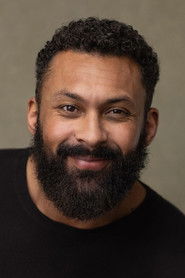

The portrait gallery generated from verified TMDB credits links each available person to a RecapRush profile. It includes Ralph Fiennes as Dr. Kelson, Alfie Williams as Spike, Jack O'Connell as Sir Jimmy Crystal, Erin Kellyman as Jimmy Ink, Chi Lewis-Parry as Samson, and Connor Newall as Jimmy Shite. These are credited roles; the public article does not duplicate them in an actor-character table.
Fiennes makes Kelson's compassion practical rather than sentimental: curiosity, dosage, observation, and risk all precede hope. Williams plays Spike as a child forced to calculate violence without letting survival read as consent. O'Connell gives Crystal a frightening combination of conviction and conscious fraud. Kellyman's quiet reactions let Ink's moral separation begin before her rebellion becomes physical. Lewis-Parry's Samson must communicate a mind returning through movement long before language confirms it.
Ending Explained
Does Dr. Kelson cure Samson?
Kelson produces a treatment that restores meaningful cognition, memory, and speech in Samson. Samson says Kelson's name and thanks him, providing the strongest proof that the infected man's personhood has re-emerged.
The film does not establish a scalable cure for every infected person. Kelson has one patient, a limited supply of drugs, no clinical infrastructure, and no opportunity to document long-term outcomes publicly. The ending presents a breakthrough, not a completed public-health solution.
Why does Jimmy Crystal kill Kelson?
Crystal needs Kelson to impersonate Old Nick and validate his authority. When Kelson recognizes Spike and orders the Fingers to crucify their leader, Crystal exposes the performance and stabs him.
The murder protects Crystal's status in the moment but destroys the logic supporting it. Ink sees that he will accept or reject “Satan” according to whatever preserves his power. His religion is revealed as control rather than faith.
What happens to Jimmy Crystal?
Spike stabs Crystal, and Kelly crucifies him upside down at the Bone Temple. He remains alive long enough to see Samson and interpret the Alpha as the devil he claimed as a father. Infected close in on him, strongly indicating his death, although the film does not pause to provide a conventional final confirmation shot.
That ambiguity suits his ending. Crystal built power by making unseen supernatural judgment feel certain. He dies—or is left to die—unable to distinguish his own mythology from the physical consequence in front of him.
Why does Jimmy Ink reveal that her name is Kelly?
Crystal renamed his followers as variations of Jimmy so they would function as his “Fingers.” Telling Spike that her real name is Kelly rejects the leader's attempt to erase individual identity.
It is also an offer of trust. Spike was forced to accept the name Jimmy after killing for survival. Kelly gives him a relationship in which neither person must use the cult's language.
What does Samson thanking Kelson mean?
It confirms that Kelson's treatment reached more than motor control. Samson recognizes a specific person, remembers their relationship, understands what was done for him, and expresses gratitude.
RecapRush reads this as the film's central reversal. The supposedly inhuman Alpha performs the most humane act in the finale, while uninfected Crystal murders the doctor who could change the world.
Why does Jim appear at the end?
Jim's scene connects the new trilogy to 28 Days Later. He is living with his daughter Sam and teaching her history when they see Spike and Kelly fleeing infected. His decision to help sets up their meeting without resolving the chase.
Jim matters as more than a cameo. He survived the first outbreak, and now a new generation arrives carrying evidence of both human cult violence and a possible treatment for Rage.
RecapRush Interpretation
The following is RecapRush's reading, not a claim about confirmed director intent. The Bone Temple is a monument built from death that still points toward care. The Fingers are living people organized into a structure that produces death. One looks monstrous but preserves names; the other looks communal but erases them.
Kelson and Crystal both use performance. Kelson paints his body, controls fire, plays metal, and deploys hallucinogens. Crystal uses costumes, ritual names, and religious language. The moral difference is purpose. Kelson's performance becomes an emergency attempt to save Spike and stop a murderer. Crystal's performance manufactures permanent permission to hurt people.
Samson's recovery is therefore inseparable from Kelly reclaiming her name. Both characters move out of identities imposed by violence: “Alpha infected” and “Jimmy Ink.” Neither becomes innocent of every act committed before the change. They become capable of directing what happens next.
Deep Analysis & Key Themes
Treatment begins when labels stop being conclusions
The survivors' label “infected” communicates real danger, but it also closes inquiry. Kelson treats the label as a diagnosis rather than a final description of the person. His work begins with the possibility that behavior has mechanisms.
This does not make him naïve. He uses distance, iodine, darts, sedation, and careful observation. Compassion is shown as disciplined attention, not refusal to acknowledge risk.
Crystal turns trauma into inherited mythology
The world ended around Jimmy Crystal, and he answers chaos with a story in which his father is Satan and every cruelty proves his place in a cosmic order. The mythology protects him from randomness, shame, and ordinary accountability.
His followers receive a similar bargain. If they are Fingers of a chosen leader, their violence belongs to something larger. The cost is identity. They surrender names and moral judgment in exchange for certainty.
Spike's violence is coerced, but its memory remains
Spike kills Jimmy Shite to survive initiation. Later survivors see his uniform and cannot easily know whether he is victim or perpetrator. The film refuses the comfort of a clean category.
Kelly's protection matters because she recognizes coercion without pretending the death did not happen. Their alliance is built on the possibility that context can explain responsibility without erasing consequence.
History is both warning and obligation
Jim teaches Sam that forgetting history permits repetition. The line reaches backward to the outbreak and forward to Spike. It also describes Crystal's cult, which converts fragments of the old world into costume without learning anything from its cruelty.
Jim's “of course” is the practical answer to the lesson. History matters when it changes whether a person helps someone running toward them.
The real opposition is care versus control
Kelson cannot guarantee what Samson will do, so he keeps learning. Crystal cannot tolerate uncertainty, so he makes others perform obedience. Both men face a world beyond control; only one accepts relationship as risk.
The ending rewards care without making it invulnerable. Kelson dies. His discovery survives in Samson, and its meaning may survive through the people who encounter him.
The film complicates the word “monster”
Samson is physically the most terrifying figure, yet he remembers and thanks. Crystal is uninfected, articulate, and socially dominant, yet he skins and sacrifices survivors. The contrast is not a claim that infection is harmless. It is a warning that biological status cannot measure humanity on its own.
What Most Viewers Missed
The iodine creates the devil Ink is already prepared to see
Kelson does not intend to resemble Satan. His protective routine stains him red, and the cult supplies the interpretation. The mistake shows how belief can organize neutral visual facts into certainty.
“Moon” arrives before “Kelson”
Samson first identifies something outside himself, then later identifies the person who treated him. The progression moves from perception to relationship. The second word carries greater evidence of memory and gratitude.
The two temples preserve opposite things
Kelson's ossuary preserves the existence of individual dead people even when their names are unknown. Crystal's group preserves one living leader by giving everyone else versions of his name. Bone becomes memorial; flesh becomes erasure.
Kelly's rebellion begins before the crucifixion
Killing Jimmy Fox to protect Spike is the decisive break. By the time Kelly turns on Crystal at the temple, she has already judged the group's revenge code and acted against it.
Jim's lesson makes his cameo part of the theme
The final scene is not detached fan service. A history lesson is interrupted by two young survivors carrying the consequences of everything the film has explored. Jim must decide whether knowledge of past catastrophe produces caution alone or responsibility.
Mid/Post-Credits
Verified post-release credit guides report no mid-credits or post-credits narrative scene. Images from the film appear during the opening portion of the credits, but the story's final scene is Jim and Sam preparing to help Spike and Kelly.
Final Thoughts
28 Years Later: The Bone Temple expands the franchise through a startlingly intimate question: what if Rage can be treated, but the person who discovers how cannot live long enough to tell the world? Kelson's answer survives in Samson's restored voice. That is more fragile than a laboratory cure and more consequential than a simple sequel hook.
The film also gives Spike an escape that does not pretend he can return to who he was before Crystal. Kelly does not rescue him by becoming fearless; she rescues him by believing that both of them still have names outside the cult. When Jim sees them running, the old franchise hero faces the same ethical test as Kelson: recognize danger, then decide whether a person inside it is still worth reaching.
FAQ
Is The Bone Temple a direct sequel to 28 Years Later?
Yes. It continues Spike's story after his encounter with Jimmy Crystal and the Fingers at the end of the 2025 film.
What is the movie's earliest verified release?
The verified London premiere took place on January 13, 2026. The earliest checked theatrical openings followed on January 14, including France. The United States wide release was January 16, 2026.
Who directed 28 Years Later: The Bone Temple?
Nia DaCosta directed the film from a screenplay by Alex Garland.
Is Samson cured of the Rage Virus?
Kelson's treatment restores speech, memory, recognition, and controlled behavior in Samson. The film does not prove that the virus has been removed from his body or that the same treatment will work universally.
Does Dr. Kelson survive?
No. Jimmy Crystal fatally stabs him. Kelson lives long enough to hear Samson speak his name and thank him.
Does Jimmy Crystal die?
He is stabbed, crucified upside down, and left as infected approach. The sequence strongly indicates his death without lingering on a final clinical confirmation.
Who is Kelly?
Kelly is the real name of Jimmy Ink, the Finger who rejects Crystal, protects Spike, and escapes with him.
Is Cillian Murphy in the movie?
Yes. He returns as Jim in the final scene, living with his daughter Sam and preparing to help Spike and Kelly.
Is there a post-credits scene?
No. Checked post-release guides identify no mid-credits or post-credits story scene.
Join the conversation
What did you think of the ending? Share your interpretation. Spoilers may appear below.
This product uses the TMDB API but is not endorsed or certified by TMDB.
No comments yet. Start the conversation.