
RECAPRUSH MOVIE GUIDE
Coraline (2009)
Directed by Henry Selick
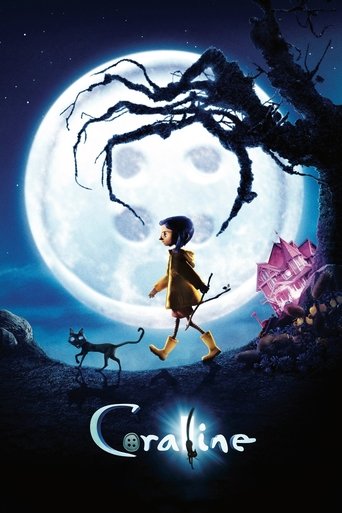
Wandering her rambling old house in her boring new town, 11-year-old Coraline discovers a hidden door to a strangely idealized version of her life. In order to stay in the fantasy, she must make a frighteningly real sacrifice.
Overview, poster, and credits from TMDB.
Read and watch our full recap ↓FROM THE RECAPRUSH LIBRARY · FULL RECAP
Coraline (2009) Recap & Ending Explained: Why the Other Mother Can Offer Everything Except Love
17 min read · Estimated reading time— views
Intro + RecapRush Viewpoint
The first lie in Coraline is also its most tempting promise: somewhere, just behind the wall, there is a life designed entirely around you. The food tastes better, the garden knows your face, the neighbors become spectacular performers, and the parents who were too busy to listen suddenly make you the center of their world. Henry Selick’s stop-motion dark fantasy understands that a child does not need to be foolish to want that life. She only needs to feel unseen.
Eleven-year-old Coraline Jones has moved into the Pink Palace Apartments with parents who love her but are consumed by work. A small locked door leads her to an Other World where improved versions of everything await—along with black buttons where eyes should be. The Other Mother’s attention initially looks like the cure for Coraline’s loneliness. It is actually a trap built by a creature called the Beldam, who studies unhappy children, performs their wishes and then turns consent into captivity.
RecapRush viewpoint: Coraline is not a lesson telling children to stop wanting more. It is a story about learning to distinguish imperfect love from perfect control. Coraline becomes brave when she realizes that real people can disappoint her without owning her, while the Other Mother’s flawless attention always comes with a price: Coraline must surrender the eyes through which she sees and judges the world for herself.
Full spoilers ahead. This article covers Coraline’s visits to the Other World, the ghost children, the game with the Beldam, the severed hand, the well and the final garden party. Verified plot events are separated from RecapRush interpretation.
Featured Image
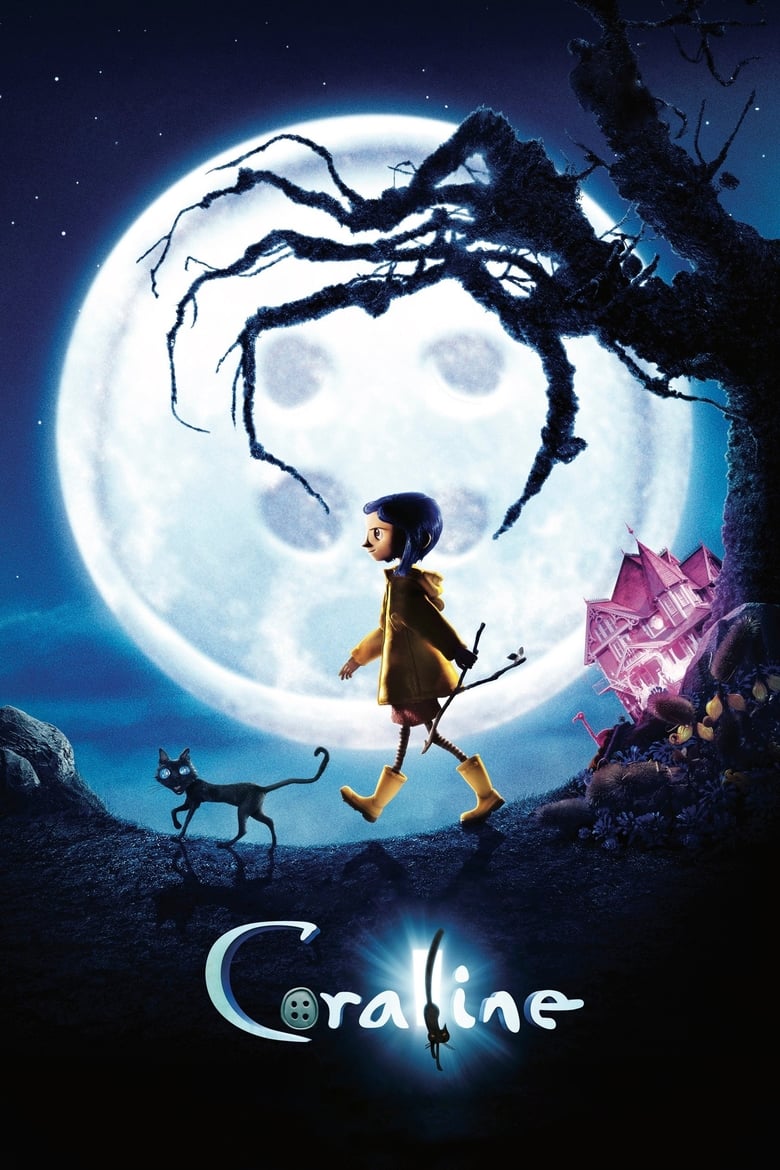
Table of Contents
Quick Facts
- Title: Coraline
- Year: 2009
- U.S. release: February 6, 2009
- Director and screenwriter: Henry Selick
- Source: Neil Gaiman’s 2002 novella Coraline
- Studio: LAIKA; Pandemonium Films
- U.S. distributor: Focus Features
- Runtime: 100 minutes
- Genres: Animation, Family, Fantasy, Horror
- Principal voices: Dakota Fanning, Teri Hatcher, Jennifer Saunders, Dawn French, Keith David and John Hodgman
- TMDB movie ID: 14836
- Article type: Full spoiler recap and ending explanation
Full Spoiler Recap
1. Coraline arrives at the Pink Palace
Coraline Jones moves with her parents, Mel and Charlie, into the Pink Palace Apartments in Ashland, Oregon. The old house has been divided among unusual tenants. Downstairs live retired performers Miss Spink and Miss Forcible, surrounded by Scottish terriers and memories of the stage. Upstairs lives the acrobat Mr. Bobinsky, who claims to be training a mouse circus.
The move has left Coraline lonely and restless. Her parents write gardening material on their computers, but neither has much time for the child actually wandering around them. Their impatience is ordinary rather than malicious: they have deadlines, financial pressures and adult exhaustion. Coraline, however, experiences only the result. She asks for attention and receives instructions to explore somewhere else.
Outside she meets Wyborne “Wybie” Lovat, the landlady’s grandson, and a black cat that follows him. Wybie gives Coraline a handmade doll found in his grandmother’s trunk. It looks exactly like Coraline except for the black buttons sewn over its eyes. The gift seems strange, but its real purpose is not yet visible: it is a spy built to learn what Coraline wants.
2. The little door opens into another home
Inside the apartment, Coraline discovers a small locked door. When Mel opens it, bricks block the passage. That night, mice lead Coraline back to the door. The bricks have vanished, replaced by a long fabric tunnel.
At the other end is a duplicate of her home, brighter and warmer than the original. A woman who looks like Mel introduces herself as Coraline’s Other Mother. She has black buttons for eyes, but she cooks an extravagant dinner and offers the undivided attention Coraline has been missing. The Other Father is playful, musical and eager to please. Coraline enjoys the evening, sleeps in an improved version of her bedroom and wakes the next morning in her real home.
The experience seems like a dream, yet details begin crossing between worlds. Wybie explains that his grandmother had a twin sister who disappeared as a child. Spink and Forcible read danger in Coraline’s tea leaves and give her an adder stone with a hole through it, telling her it can help locate things that are lost.
3. The Other World performs Coraline’s wishes
Coraline returns through the tunnel. Each visit expands the fantasy. The Other Bobinsky’s mice perform an elaborate circus. Other Spink and Other Forcible stage a grand theatrical show. The Other Father unveils a living garden designed in Coraline’s image. Even Wybie has an Other version, but his mouth has been sewn into a smile so he cannot contradict or annoy her.
The black cat can cross between worlds without using the tunnel and can speak while inside the Other World. He warns Coraline that the place is a trap. The Other Mother has not discovered Coraline’s needs through love; she has observed them and constructed bait.
That difference becomes undeniable when the Other Mother offers to let Coraline stay forever. There is one condition: Coraline must allow buttons to be sewn over her eyes. Coraline refuses. The fantasy stops behaving like a gift and reveals itself as a contract.
4. The Other Mother becomes the Beldam
When Coraline demands to return home, the Other Mother grows taller, thinner and more severe. She imprisons Coraline behind a mirror, where three ghost children appear. They explain that the creature is the Beldam. Through dolls, she watched them, learned what their lives lacked and lured them into her world. After they accepted the buttons, she consumed their lives and trapped their souls.
One of the ghosts is Wybie’s missing great-aunt. They ask Coraline to find the hidden objects containing their eyes so they can finally be free.
Other Wybie, despite having been created as part of the Beldam’s performance, rebels against his maker and helps Coraline escape. His compassion proves that even something fashioned for control can make a selfless choice. The Beldam punishes him, but Coraline reaches the real world.
5. Coraline’s parents disappear
Coraline tries to explain the danger to Wybie, but the story sounds impossible. He recognizes that the doll resembles his grandmother’s missing sister and takes it away. Soon Coraline discovers that Mel and Charlie have vanished. A message on the mirror suggests they are trapped, and the cat confirms that the Beldam has taken them.
The disappearance changes Coraline’s goal. Earlier she entered the Other World because reality felt insufficient. Now she chooses to return precisely because her imperfect real parents matter. She equips herself with the adder stone and proposes a game, correctly guessing that the Beldam’s pride will make rules appealing.
If Coraline can find the ghost children’s three eyes and her parents, everyone goes free. If she fails, she will stay and accept the buttons. The Beldam agrees while already intending to cheat.
6. The beautiful world collapses as Coraline sees through it
The search revisits the Other World’s spectacles, but each attraction now exposes its predatory design. Coraline uses the hole in the adder stone to see where illusion conceals reality. The Other versions of her neighbors become obstacles protecting the children’s eyes.
In the garden, the Other Father is forced to attack Coraline from inside a mechanical mantis. A remnant of his affection helps her escape and retrieve one eye. The Other Spink and Forcible performance becomes a monstrous fusion. The Other Bobinsky’s circus loses its charm as the rats reveal what the show has always been hiding.
Each recovered eye releases part of the Beldam’s hold. At the same time, the world literally loses substance. The colorful scenery had no independent life; it existed to keep Coraline engaged. Once it stops serving that purpose, the Beldam allows it to collapse into blankness.
7. Coraline tricks the Beldam
After finding all three eyes, Coraline still must locate her parents. The remaining Other House has transformed into a web, and the Beldam now resembles a skeletal spider. Coraline suspects that Mel and Charlie are hidden inside a snow globe on the mantel.
She pretends to believe they are behind the little door and asks the Beldam to open it. When the creature reaches for the key, Coraline throws the cat at her face, grabs the snow globe and runs. The ghost children help pull the door closed from the tunnel side. The door slams on the Beldam’s hand, severing it, while Coraline locks the passage.
Back in the real world, Mel and Charlie reappear with no memory of their captivity. Their ordinary concerns return immediately, but they also celebrate finishing their work and give Coraline the gloves she had wanted. Coraline embraces them, newly able to recognize love that does not always arrive as a performance.
8. The hand follows the key
The ghost children visit Coraline in a dream. They are free, but warn that the danger is not finished because the key still exists. Coraline decides to drop it into the old well, a place so deep that retrieval should be impossible.
Before she can dispose of it, the Beldam’s severed metal hand attacks. It tries to drag Coraline—and the key—back toward the entrance. Wybie arrives, now convinced that Coraline’s account was true. Working together, they crush the hand beneath a heavy stone. They wrap the remains and the key, throw the bundle into the well and seal the opening.
9. The garden becomes real through shared work
The final sequence returns to the Pink Palace garden. This time its beauty is not the Beldam’s instant spectacle. Coraline’s family and neighbors cultivate it together. Wybie brings his grandmother, and Coraline prepares to tell her what happened to the missing twin.
The black cat slips behind the Pink Palace sign and disappears from view. The film retains a trace of magic, but its emotional conclusion is grounded in a community choosing to attend to one another.
Cast + TMDB
Cast and Characters








This article is connected to TMDB movie 14836. RecapRush uses the verified TMDB credits stored with the article to render its Cast and Characters portrait gallery and actor-profile links. The gallery includes Dakota Fanning as Coraline Jones, Teri Hatcher as Mel Jones and the Other Mother, Jennifer Saunders as Miss Spink, Dawn French as Miss Forcible, Keith David as the Cat and John Hodgman as Charlie Jones and the Other Father. A duplicate actor/character table is intentionally omitted from the public article.
More from RecapRush
 Whiplash (2014) Recap & Ending Explained: Does Andrew Beat Fletcher or Become His Proof?
 Primetime (2026) Recap & Ending Explained: What Does Dan's SAG Card Mean?
 Inception (2010) — Full Spoiler Recap & Ending Explained
Ending Explained
Does Coraline really escape the Other World?
Yes. The film presents Coraline’s return, her parents’ restoration, the destruction of the hand and the garden party as the real-world resolution. Popular theories suggest that the last scene could be another illusion, but the movie supplies no decisive evidence that the Beldam has replaced reality again. The stronger textual reading is that Coraline escapes while remaining aware that strange forces exist beyond what adults recognize.
The cat’s final disappearance preserves mystery; it does not prove the entire ending is false.
Why does the Beldam want Coraline’s eyes?
The buttons turn the Beldam’s promise into permanent ownership. The ghost children explain that previous victims accepted the procedure and lost their lives and freedom. On a symbolic level, replacing eyes with buttons would surrender Coraline’s independent perception. She could receive endless attention only after giving up the ability to see the Other Mother critically.
The Beldam does not merely want Coraline to live nearby. She wants Coraline to consent to a reality the Beldam controls.
Why do Coraline’s parents remember nothing?
The film does not give a technical explanation. Their lack of memory could be an effect of the Beldam’s magic or simply part of how the Other World hides itself from adults. What matters for Coraline’s arc is that she cannot rely on parental confirmation to validate what happened. She acts, rescues them and carries the knowledge herself.
Their forgetfulness also prevents the ending from becoming a simple reward in which the parents fully transform after learning a supernatural lesson. They remain recognizably imperfect people.
Why does Wybie destroy the severed hand?
Wybie initially doubts Coraline, but evidence connected to his great-aunt helps him understand that the danger is real. Saving Coraline corrects the isolation on which the Beldam depends. Every earlier victim was separated from the people who might have helped. Coraline survives because she accepts help—from the cat, Other Wybie, the ghosts and finally the real Wybie.
What does throwing the key into the well mean?
The act closes the physical route through which the Beldam can reach another child. It also shows that Coraline has stopped treating the door as a private source of excitement. Curiosity opened the passage; responsibility makes her remove the temptation for whoever comes next.
Why does the movie end with a garden?
The Other Father’s magical garden was instantly spectacular and shaped like Coraline’s face. The real garden requires dirt, weather, patience and cooperation. That contrast summarizes the film. Real love is not always tailored perfectly to one person, but it grows through shared effort rather than consumption.
RecapRush Interpretation
The Beldam is frightening because she practices a recognizable form of manipulation. She does not begin with violence. She begins with research. The doll observes Coraline, the Other World isolates what she feels is missing, and the performance returns those desires in exaggerated form. The Beldam’s attention is therefore precise but not empathetic. She knows Coraline without respecting her.
Real parents operate in the opposite way. Mel and Charlie frequently fail to notice what Coraline needs in the moment. Yet they have lives, limits and wills separate from hers. Their imperfection is evidence that they are people rather than props. The film asks Coraline to accept that distinction without pretending neglect is harmless.
Coraline’s growth is equally nuanced. She does not become obedient or lose her curiosity. The same boldness that brings her through the door enables her to challenge the Beldam’s game. Maturity is not the extinction of desire; it is the ability to examine what a desire might cost.
Deep Analysis & Key Themes
Attention is not the same as love
The Other Mother provides everything Coraline requested, but every gift narrows Coraline’s freedom. Dinner, games and spectacle are investments meant to produce consent. Real love can be distracted and disappointing; it also allows the loved person to remain separate.
The Beldam’s central contradiction is that she wants Coraline desperately but cannot tolerate Coraline’s independence. What she calls family is possession.
Eyes represent judgment and agency
The button imagery works because eyes are more than a physical feature. Coraline’s eyes let her compare worlds, notice cracks in illusion and decide whom to trust. Sewing them shut under decorative replacements would make the Beldam’s version of reality final.
The adder stone reinforces this motif. Coraline defeats illusion by looking through an object that reveals what ordinary sight misses. The story’s heroine wins through sharper perception, not through blindness disguised as happiness.
The spider-web structure begins long before the climax
The Beldam’s final body makes her resemble a spider, but she has behaved like one from the beginning. The doll gathers information, the tunnel draws prey inward, and each attraction is a strand leading toward the button ceremony. Her world is not a home. It is an interactive web.
The collapsing environment exposes that structure. The garden, theater and circus were never places with purposes of their own; they were surfaces arranged around the victim.
Courage requires fear, not invulnerability
Coraline is sometimes careless, proud and unfair. Those flaws keep her courage from becoming a generic superpower. She returns to the Beldam knowing exactly why she should be afraid. Her bravery is the decision to act while fear remains appropriate.
The ghost children call her brave because she attempts what they could not. The film is compassionate toward their failure: they were lonely children facing a predator who had studied them. Coraline’s survival depends partly on warnings and tools they never had.
Handmade imperfection supports the story’s argument
LAIKA’s stop-motion technique gives physical texture to both worlds. The puppets, costumes and sets carry evidence of construction. According to LAIKA’s production exhibit, the shoot lasted more than 18 months after two years of pre-production, with more than 130 sets built across 52 stages. Coraline’s face alone had over 207,000 possible combinations.
That labor matters thematically. A film about rejecting effortless perfection was created through visible patience, tiny materials and human craft. The Other World may pretend to appear instantly, but the movie itself celebrates what takes time to make.
What Most Viewers Missed
The doll does not grant wishes—it performs surveillance
The Beldam seems uncannily generous because she already knows Coraline’s complaints. The doll has been watching. Her “perfect parenting” is targeted manipulation built from stolen information.
Other Wybie proves creation does not guarantee obedience
The Beldam creates him as a silent accessory, even sewing his mouth shut. He still chooses to help Coraline. His rebellion previews the limits of the Beldam’s control and gives Wybie’s final rescue an echo across both worlds.
The Beldam’s game is never fair
Coraline wins the stated challenge, but the Beldam still tries to keep her and hide her parents. This is essential. Predators who manufacture the rules are not restrained by them. Coraline survives because she understands the game as a delaying tactic and prepares a separate escape.
Coraline does not simply learn to “be grateful”
That summary can make the film sound like punishment for an unhappy child. Coraline’s parents genuinely dismiss her too often. The ending improves because the family and community become more attentive, not because Coraline alone accepts deprivation. Her lesson is to recognize the difference between flawed relationships capable of growth and an idealized relationship designed to erase her autonomy.
The two gardens answer each other
The Other Garden blooms as a portrait of Coraline, flattering her centrality. The real garden grows through a neighborhood’s work. One reflects narcissistic attention; the other creates belonging.
The final cat moment protects ambiguity without canceling the ending
The cat’s disappearance suggests that supernatural passages and abilities remain in the world. It keeps the final scene from becoming entirely ordinary. Mystery survives even though the Beldam’s immediate route has been closed.
Mid/Post-Credits
The verified sources used for this article do not establish a separate mid-credits or post-credits narrative scene. Coraline’s story concludes with the real garden gathering and the cat’s disappearance near the Pink Palace sign. RecapRush therefore does not claim an additional scene or sequel tease beyond the confirmed ending.
Final Thoughts
Coraline endures because its fantasy is calibrated to a real emotional weakness. The Other Mother does not lure Coraline with wealth alone. She offers the experience of being treated as endlessly interesting. That is why the buttons are such a devastating price: Coraline can remain the center of the spectacle only if she gives up the capacity to see that the spectacle is consuming her.
The ending does not declare reality magical in the same way. Coraline’s parents stay busy, the neighbors stay eccentric, and gardens still require labor. What changes is Coraline’s relationship to that imperfection and the community’s willingness to meet one another inside it.
RecapRush verdict: The Beldam can imitate affection, entertainment and even beauty. She cannot create love, because love requires another person’s freedom—the one thing her web is built to destroy.
FAQ
What is Coraline’s correct TMDB ID?
The verified TMDB movie ID is 14836.
Is Coraline a Disney movie?
No. Coraline was produced by LAIKA and Pandemonium Films, with Focus Features distributing it in the United States.
Who directed Coraline?
Henry Selick wrote and directed the film, adapting Neil Gaiman’s novella.
Who is the Other Mother?
She is the Beldam, a shapeshifting predator who creates an idealized world to lure children, replace their eyes with buttons and trap their souls.
Why does the Other Mother have button eyes?
The buttons visually mark the artificial nature of her world and foreshadow the price she demands from her victims. They symbolize identity and perception surrendered to her control.
Who are the three ghost children?
They are earlier victims of the Beldam. One is Wybie’s missing great-aunt. Coraline frees their souls by recovering the objects containing their eyes.
Does the Beldam die?
Coraline escapes and shuts the door on her, then destroys the severed hand with Wybie’s help. The film confirms that the immediate threat is defeated and the key removed, but does not provide a conventional on-screen death scene for the Beldam herself.
What happens to the key?
Coraline and Wybie seal the Beldam’s crushed hand and the key in a bundle, throw it into the old well and cover the opening.
Is the ending still the Other World?
The film does not confirm that theory. Its narrative presents the garden party as reality. The cat’s unusual exit preserves magic and ambiguity without proving Coraline remains trapped.
Does Coraline have a post-credits scene?
The reliable sources checked for this article do not confirm a separate narrative scene after the credits.
Join the conversation
What did you think of the ending? Share your interpretation. Spoilers may appear below.
This product uses the TMDB API but is not endorsed or certified by TMDB.
No comments yet. Start the conversation.