RECAPRUSH MOVIE GUIDE
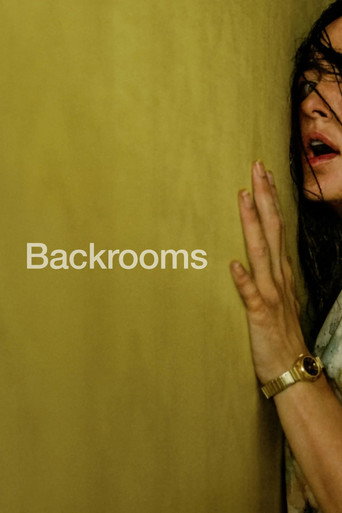
Backrooms (2026)
A strange doorway appears in the basement of a furniture showroom.
Overview, poster, and credits from TMDB.
Read and watch our full recap ↓FROM THE RECAPRUSH LIBRARY · FULL RECAP
Backrooms (2026) Recap & Ending Explained: Did the Real Mary Escape?
16 min read · Estimated reading time— views
Intro + RecapRush Viewpoint
Kane Parsons' Backrooms turns the internet's most famous empty maze into a story about two people already trapped before either crosses the basement wall. Clark is a failed architect, an alcoholic and the exhausted owner of Cap'n Clark's Ottoman Empire, a cavernous furniture showroom where he performs as a pirate mascot. Mary, his therapist, sells self-help recordings while carrying unresolved memories of her abusive mother. When Clark finds an impossible doorway beneath the store, the place offers him something ordinary life no longer does: scale, mystery and the feeling that he matters. [1, 4, 5]
RecapRush Viewpoint: The maze does not simply reveal Clark's damage; it flatters it. That is why his final embrace with Pirate Clark is fatal. Mary survives the creature, but the ending denies her a clean escape: Async replaces the maze's yellow corridors with an interrogation room, another controlled space in which someone else decides what her experience means.
Full spoilers ahead. The recap below covers Clark's discovery, the failed expedition, Mary's search, Pirate Clark's attack and Async's final interrogation. Plot details were checked against A24's official page, the official trailer, contemporary reviews and multiple ending explainers. Interpretation is labeled separately. Identity and availability checked October 4, 2026.
Featured Image
Table of Contents
Quick Facts
- Title: Backrooms
- Director: Kane Parsons
- Writer: Will Soodik
- U.S. theatrical release: May 29, 2026
- Distributor: A24
- Production companies: A24, Chernin Entertainment, Atomic Monster, 21 Laps Entertainment, Phobos and The North Road Company
- Runtime: 111 minutes on the verified TMDB record
- Genres: Horror, mystery, science fiction
- Principal cast: Chiwetel Ejiofor, Renate Reinsve, Finn Bennett, Lukita Maxwell, Mark Duplass and Avan Jogia
- TMDB movie ID: 1083381
- IMDb ID: tt26657236
- Streaming status checked October 4, 2026: A24 lists digital viewing options; HBO Max also carries the film in the United States. [1, 3]
The movie is based on the visual mythology Parsons developed in his Kane Pixels YouTube series, itself inspired by the 2019 internet image and the idea of “noclipping” out of reality into endless transitional rooms. The feature tells its own character-centered story rather than presenting the web series as required homework. [5, 7]
Full Spoiler Recap
1. Clark lives inside an imitation of a home
In the early 1990s, Clark manages Cap'n Clark's Ottoman Empire, a discount furniture store whose staged bedrooms and living rooms imitate domestic comfort. His pirate commercials promise a cheerful brand identity that his real life cannot support. He is separated from his wife, drinks too much and sometimes sleeps in the showroom. The former architect is surrounded by structures he did not dream of building and by rooms that look lived in but belong to nobody. [4, 5]
Clark sees Mary for therapy. Their sessions establish his bitterness and isolation, while Mary's own past quietly shadows the professional calm she tries to maintain. She has built a business around reassuring other people, including self-help audio tapes, yet memories of an abusive mother remain unresolved. [4]
2. The basement wall opens onto an impossible place
In the store's basement, Clark discovers a porous section of wall and passes through it. The ordinary service area gives way to an apparently infinite network of fluorescent rooms, corridors and installations. The spaces resemble offices, stores and half-remembered interiors, but their scale and connections make no physical sense. [1, 4]
Clark eventually returns to the showroom. Instead of treating the doorway only as a threat, he becomes fascinated by it. The discovery restores his sense of purpose: the failed architect has found an environment no architect could have designed, and the furniture salesman now possesses a secret larger than the life that humiliates him.
3. Clark recruits Bobby and Kat to document the maze
Clark brings two employees, Bobby and Kat, into the Backrooms to explore and record what they find. The expedition gives the film its found-footage perspective and turns the empty architecture into a navigational problem. Familiar-looking rooms repeat, distances refuse to behave and apparent routes do not guarantee a return. [2, 6]
The group also encounters evidence that they are not simply walking through an abandoned structure. Human forms and distorted imitations exist inside it. The Backrooms appear capable of reproducing people and environments, but the copies do not follow an ordinary logic. The explorers' cameras can document surfaces; they cannot explain the system that produces them.
Something attacks during the expedition. The group is separated, and the story jumps forward rather than supplying a complete procedural account of every missing person. Clark does not return to his previous life. His discovery has become an obsession and then a form of captivity. [6]
4. Async has already been watching the impossible
Elsewhere, the film periodically shows Phil and the research organization Async. Phil explains later that the company once made MRI machines, then redirected itself after discovering the Backrooms. Async studies and maps the dimension, approaching it as territory that can be measured and operationalized. [6]
The organization's presence changes the scale of Clark's story. He did not discover a private hallucination known only to him, yet institutional knowledge does not make the place safe or understood. Async has equipment, personnel and procedures; it still cannot provide a complete account of what controls the maze or what its copies are.
5. Mary receives Clark's message and enters the store
After Clark disappears, Mary receives a disturbing answering-machine message and goes to the furniture store to find him. The empty showroom already resembles the Backrooms: staged rooms sit under commercial lighting, stripped of the families they are meant to represent. Following Clark's trail into the basement, Mary crosses the same threshold. [4, 6]
Her search moves through spaces that seem to echo memory and psychology without reducing themselves to a simple dream. She encounters unsettling tableaux and distorted human presences. The film repeatedly invites a metaphorical reading, then preserves the physical danger: Mary can be chased, struck, restrained and captured inside this place.
6. The pursuer is connected to Clark
The figure hunting Mary is eventually revealed as a grotesque double of Clark in the pirate costume from his store advertisements. “Pirate Clark” turns his humiliating commercial persona into a predatory body. The costume that once made Clark perform cheerfulness for customers now becomes the shape of the maze's threat. [8, 9]
The original Clark is also inside the Backrooms, visibly altered by his time there. He overpowers Mary and ties her to a chair. Around them are other malformed copies—human likenesses produced without the stability or empathy that make a person recognizable as themselves.
7. Clark treats captivity as acceptance
Clark tells Mary that he has made peace with Pirate Clark. He now understands the double as the embodiment of a destructive part of himself and intends to remain in the Backrooms. His language sounds like a breakthrough assembled from therapy, but the situation exposes the difference between recognition and surrender. He has kidnapped Mary, built a life around his obsession and calls coexistence with the monster healing. [8]
Mary challenges that reasoning. Their exchange becomes a distorted therapy session in which Clark controls the room, the restraints and the terms. He wants her not merely to hear his explanation but to validate it.
8. Pirate Clark releases Mary, then kills Clark
Pirate Clark frees Mary from the chair. Clark interprets the creature's behavior as proof that it can be accepted. To demonstrate that Mary is wrong, he embraces his double. The creature bites him and kills him. [8, 9]
The moment destroys Clark's fantasy that naming the monster gives him authority over it. Whatever psychological meaning Pirate Clark carries, it is not domesticated by Clark's self-description. The double does not complete him; it consumes him.
9. Mary runs through the maze
Mary escapes while Pirate Clark pursues her through shifting spaces. She carries a cement handprint encountered earlier and uses it to stun the creature. The object matters because it is a literal impression—a record of contact—inside a world filled with unstable replicas. [8]
Her route appears to lead back toward the furniture store. For a brief moment, escape seems possible: the familiar commercial environment returns, and Mary has survived both Clark's captivity and the creature he mistook for an ally.
10. Async captures Mary
Hazmat-suited personnel seize Mary. She wakes in an interrogation room opposite Phil, who identifies Async and describes its pivot from medical-imaging equipment to Backrooms research. He asks what she saw. Mary asks where she is and what will happen to her, but his assurances remain vague. [6, 9]
Mary compares the problem of describing the Backrooms to explaining a dog to someone who has never seen one and then asking that person to draw it. The analogy captures the limits of Async's project: information collected from witnesses can produce another representation without guaranteeing understanding.
11. The final image preserves two Marys
The film cuts between Mary's interrogation and images from the Backrooms, including a distorted Mary copy seated in an imitation of the room. It ends without stating that the person with Phil is a copy, or that the creature in the maze is the original. Both possibilities remain open. [8, 9]
Mary may have escaped the supernatural architecture only to enter Async's controlled architecture. The final cut makes those spaces rhyme: one copies rooms through an unknown process; the other reconstructs experience through questions, surveillance and classification.
Cast + TMDB
Cast and Characters










The cast gallery on this page comes from the verified TMDB record. Chiwetel Ejiofor plays Clark, Renate Reinsve plays Mary, Finn Bennett plays Bobby, Lukita Maxwell plays Kat, Mark Duplass plays Phil and Avan Jogia plays Naren Warne. Robert Bobroczkyi is credited as Pirate Clark. The record also lists Krista Kosonen, Katharine Isabelle, Philip Granger and Peter New among the supporting cast. [3]
More from RecapRush
 Wake Up Dead Man: A Knives Out Mystery (2025) Recap & Ending Explained: Why Blanc Refuses His Victory
 South Park Season 29 (2026): Kenny’s Death, Butters’ Revolt and the Cost of Calling It Progress
 Weapons (2025) Recap & Ending Explained: Why Alex Turns Gladys’s Spell Against Her
Kane Parsons directs, Will Soodik is the credited writer, Jeremy Cox is director of photography and Danny Vermette is production designer. Edo Van Breemen and Parsons composed the score. [1, 3, 4]
Browse the complete cast and crew on TMDB.
Ending Explained
Does Clark die?
Yes. Clark embraces Pirate Clark to prove that he has accepted his destructive double, but the creature bites and kills him. The available ending accounts treat the attack as fatal; the film does not show Clark escaping afterward. [8, 9]
RecapRush interpretation: Clark confuses self-awareness with moral immunity. He can describe Pirate Clark as part of himself, but that vocabulary does not undo the people he endangered or give him control over violence. The hug is tragic because it is both sincere and narcissistic: he stages a demonstration for Mary instead of listening to her warning.
Is Pirate Clark literally Clark?
The creature is a distorted Backrooms version of Clark wearing his pirate-mascot costume. The film does not establish a simple scientific rule for whether copies are independent organisms, psychological projections or both. Parsons has explicitly resisted closing the interpretation and has protected the larger explanation for future stories. [8]
The literal plot therefore supports one firm statement: Clark and Pirate Clark exist as separate bodies in the climax, and the double kills the man it resembles. Saying that the creature is only a hallucination would contradict what Mary physically experiences.
Did the real Mary escape?
The film does not give a definitive answer. Mary reaches what appears to be the store, is captured by Async and is questioned by Phil. The final images also show a deformed Mary copy in a corresponding room inside the Backrooms. [8, 9]
The most direct reading is that the human Mary escaped the maze and Async detained her, while a copy remains behind. A darker alternative is that the apparent escape is another constructed layer or that the two versions cannot be confidently distinguished. The movie deliberately withholds the evidence needed to choose with certainty.
What is Async, and can Phil be trusted?
Async is a research organization that formerly made MRI machines and shifted toward exploring and mapping the Backrooms. Its personnel recover Mary, and Phil conducts the final interview. [6, 9]
Nothing in the ending confirms that Phil is a creature. It also does not establish Async as a rescue service acting in Mary's interest. Phil controls the location, avoids clear answers about her future and treats her testimony as research material. Mary is safer from Pirate Clark but not free.
Who controls the Backrooms?
The film does not reveal an owner, intelligence or final mechanism. The rooms sometimes reflect Clark and Mary's memories and identities, but the dimension also exists beyond either character and is already known to Async. Parsons has said the deeper revelation is material he wants to preserve for the story's future. [8]
What does the cement handprint mean?
Factually, Mary uses the handprint to stun Pirate Clark during her escape. [8]
RecapRush interpretation: A handprint is evidence that a particular body touched a surface. In a film of copies, staged rooms and unstable identities, it represents the stubborn physical fact of contact. Mary does not defeat the monster with an abstract explanation; she survives with a heavy trace left by somebody's real hand.
RecapRush Interpretation
The following is editorial interpretation, separate from the verified plot.
Clark and Mary enter the maze from different positions. Clark experiences ordinary life as a series of roles that diminish him: failed architect, separated husband, salesman and pirate mascot. The Backrooms make him an explorer. Their infinity transforms his failure to belong into apparent chosenness.
Mary is professionally trained to enter other people's stories without making herself the center. Yet the maze pulls her own memories into the environment and eventually gives her a double. Her struggle is not to master the space but to retain enough distance from its images to keep moving.
This difference explains the climax. Clark wants the Backrooms to validate him, so he treats Pirate Clark as an answer. Mary recognizes that an image can be meaningful and still be dangerous. She does not need to solve the copy's metaphysical status before running from it.
Async offers a second trap built from the desire to master experience. Phil believes mapping and testimony can turn the unknown into a system. Mary's dog analogy exposes the gap: a description passed through someone else's categories becomes a new picture, not the thing itself. The final duplicate interrogation room visualizes that problem.
Deep Analysis & Key Themes
Liminal space becomes emotional recruitment
The film's empty rooms are frightening because they feel designed for people who are absent. Clark already lives in that condition. His furniture showroom is full of domestic spaces without domestic life, and his pirate image is a cheerful identity without joy. [4, 5]
RecapRush analysis: The portal does not interrupt his world so much as reveal its underlying form. That continuity lets the maze recruit him. He recognizes himself in its abandoned architecture.
Pirate Clark turns branding into a monster
Clark's costume is a commercial joke he knows does not quite work—the “Ottoman Empire” premise should suggest a sultan, not a pirate. [4] The Backrooms discard that logic and preserve the visual anyway.
RecapRush analysis: Branding already creates a simplified copy of a person. Pirate Clark is that copy made physical and freed from the obligation to remain friendly. The monster is not Clark's secret authentic self; it is a caricature that Clark mistakenly elevates into truth.
Architecture is memory without a reliable narrator
The Backrooms produce spaces that feel familiar without belonging to a stable past. Reviews describe the film as concerned with people trapped in remembered scenes and altered versions of their lives. [4, 5]
RecapRush analysis: A room seems objective because walls can be measured, yet rooms also organize behavior—where to sit, where to wait, where one is allowed to leave. The film uses architecture to show how memory can feel concrete while still distorting the person inside it.
Therapy language can clarify or conceal
Clark can articulate that Pirate Clark represents destruction. That insight sounds therapeutic, but he uses it to justify remaining in the maze and to demand Mary's agreement.
RecapRush analysis: The film is wary of language used as a certificate of healing. Naming a pattern matters only if it changes one's responsibility toward other people. Clark has explanation without accountability.
Async mirrors the maze
The supernatural Backrooms reproduce environments without explaining why. Async maps environments and collects testimony without guaranteeing it understands them.
RecapRush analysis: The final interrogation does not say science is evil. It asks whether an institution can become another labyrinth when knowledge gives it power over the person who supplied the evidence.
The film separates mystery from vagueness
The plot answers immediate physical questions: Clark's double kills him, Mary runs, Async captures her and a Mary copy remains visible. It withholds larger ontological answers—what the realm is, who controls it and how copies relate to originals. [8, 9]
RecapRush analysis: That distinction matters. Ambiguity works because the ending is specific about events while remaining uncertain about their ultimate category.
What Most Viewers Missed
The showroom is already a human-made Backrooms
Before the portal opens, Clark sleeps among furniture displays: rooms built to resemble homes but disconnected from real households. The supernatural space amplifies an environment the film has already taught us to distrust. [4]
Clark's old profession makes the discovery personal
Clark is a failed architect. Finding an infinite structure is not only a supernatural event; it confronts him with architecture beyond ownership, code or authorship. [4, 5]
The final rooms repeat the film's central problem
Mary's Async interview room and the copy's room resemble one another. The visual does not prove that Async is inside the Backrooms, but it prevents a simple opposition between “maze” and “reality.” Both spaces confine Mary and demand a version of her story.
Pirate Clark frees Mary before attacking Clark
The creature's decision to release Mary makes it harder to read as a straightforward extension of Clark's will. It has behavior of its own, then destroys the man who believes he has reached an accommodation with it. [8]
The handprint is an anti-copy object
The Backrooms generate unstable likenesses. A cast handprint records direct pressure from one body at one moment. Mary carries a physical trace through a world of replicas and uses it to survive.
The end-credits music continues the film's atmosphere
Boards of Canada's “The World Becomes Flesh” plays during the end credits. Parsons has cited the duo's music as an influence on the film's sensibility. [10]
Mid/Post-Credits
There is no mid-credits or post-credits scene. Contemporary ending coverage explicitly confirms that the film does not add a later scene to resolve Mary's identity or Async's intentions. The Boards of Canada track “The World Becomes Flesh” plays over the credits. [9, 10]
Final Thoughts
Backrooms succeeds because it does not treat its internet mythology as a list of levels to tour. Parsons builds the feature around the emotional seduction of the place. Clark enters a maze that makes his failure feel exceptional, then mistakes a violent copy for acceptance. Mary survives because she never needs the maze to love her back.
The final interrogation is the movie's sharpest turn. A conventional escape would restore Mary to ordinary reality. Instead, Async receives her as evidence. Whether the woman facing Phil is the original remains unanswered, but the more immediate loss is clear: she is still in a room designed by someone else, still being asked to produce the version of herself that the room can contain.
Join the conversation
What did you think of the ending? Share your interpretation. Spoilers may appear below.
This product uses the TMDB API but is not endorsed or certified by TMDB.
No comments yet. Start the conversation.