

RECAPRUSH MOVIE GUIDE
Wake Up Dead Man: A Knives Out Mystery (2025)
When young priest Jud Duplenticy is sent to assist charismatic firebrand Monsignor Jefferson Wicks, it’s clear that all is not well in the pews. After a sudden and seemingly impossible murder rocks the town, the lack of an obvious suspect prompts local police chief Geraldine Scott to join forces with renowned detective Benoit Blanc to unravel a mystery that defies all logic.
Overview, poster, and credits from TMDB.
Read and watch our full recap ↓FROM THE RECAPRUSH LIBRARY · FULL RECAP
Wake Up Dead Man: A Knives Out Mystery (2025) Recap & Ending Explained: Why Blanc Refuses His Victory
13 min read · Estimated reading time— views
Intro + RecapRush Viewpoint
A priest needs to be believed. A detective needs to be right. Put them inside a church where everyone has learned to confuse obedience with goodness, and neither ambition is quite enough. Wake Up Dead Man: A Knives Out Mystery makes its impossible murder a test of how we treat people once their worst secrets become visible.
Rian Johnson's third Benoit Blanc film brings Daniel Craig's detective into a gothic world of inherited resentment, frightened loyalty, and a fortune that refuses to stay buried. Josh O'Connor's Father Jud Duplenticy gives that world its emotional center: a man whose faith cannot be separated from his knowledge of his own capacity for harm.
RecapRush Viewpoint: The ending's boldest move is to make restraint the detective's achievement. Solving the case matters, but Blanc must also decide whether another person's collapse should become his triumph.
Full spoilers ahead: This article reveals the killers, the staged resurrection, Martha's confession, and the diamond's final location. Plot facts are separated from RecapRush's interpretations below.
Featured Image
Featured image: TMDB poster for Wake Up Dead Man: A Knives Out Mystery (movie ID 812583).
Source: https://www.themoviedb.org/movie/812583
Table of Contents
Quick Facts
- Title: Wake Up Dead Man: A Knives Out Mystery
- Year: 2025
- Type: Live-action movie; third Benoit Blanc mystery
- Genres: Mystery, thriller, comedy
- Writer and director: Rian Johnson
- U.S. theatrical release: November 26, 2025, in select theaters
- Netflix release: December 12, 2025
- Runtime: TMDB lists 145 minutes; Netflix displays approximately 2 hours 26 minutes
- TMDB movie ID: 812583
Full Spoiler Recap
1. Jud enters a parish built around exclusion
After striking a fellow deacon, Jud is reassigned to Our Lady of Perpetual Fortitude in upstate New York. Monsignor Jefferson Wicks dominates its small congregation. Jud's wish to help people collides with Wicks's habit of driving them away.
The parish also carries an old family wound. Wicks's grandfather Prentice supposedly left a fortune, but his daughter Grace never received it. Her destructive search through the church, including its crucifix, survives in the community as a story of her supposed wickedness. That inherited version of events will prove dangerously incomplete. [1]
Jud is not simply an innocent visitor arriving to correct everyone else. His anger creates real vulnerabilities. His public confrontation with Wicks and his drunken theft of a devil-shaped ornament supply the investigation with a persuasive image of a man who might lash out. [2]
2. A collapse becomes an impossible murder
During the Good Friday service, Wicks steps into a small room beside the pulpit and collapses. Jud discovers what appears to be a bloody stabbing. No obvious attacker could have entered and escaped, and the ornament associated with Jud becomes incriminating evidence. Police chief Geraldine Scott brings in Blanc. [15]
The eventual solution depends on separating two events that the witnesses assume are one. Wicks first falls unconscious after drinking from a drugged flask. A concealed prop releases fake blood by remote control. Nat Sharp then uses his authority as a doctor to approach the apparent victim and carry out the actual stabbing. The killer enters openly, after people think the murder has already happened. [16]
3. The congregation has reasons to fear its leader
Blanc recruits Jud, whose account helps reconstruct the parish's tensions. The suspects include Martha Delacroix, Wicks's longtime assistant; groundskeeper Samson Holt; lawyer Vera Draven; aspiring politician Cy Draven; physician Nat; writer Lee Ross; and cellist Simone Vivane.
Wicks intends to abandon his followers and exploit his newly discovered inheritance. Cy, revealed to be his biological son, offers a route toward a larger public platform. Vera has spent years raising Cy under a different understanding of his parentage. Wicks's plan to expose the congregation's private vulnerabilities turns their dependence on him into an immediate threat. [4]
Here the familiar suspect parade acquires an uncomfortable intimacy. People have entrusted their shame to a man who can now weaponize it. Their loyalty has purchased neither safety nor respect.
4. Louise interrupts the game
Jud calls a construction company while tracing arrangements connected to the crypt. The conversation initially looks like a frustrating delay. Then employee Louise asks him for prayer and opens up about her sick mother. Jud stops treating the voice on the line as a means of obtaining evidence and answers a person in distress. [5]
RecapRush reads this interruption as the film's rehearsal for its ending. Jud has been drawn into the pleasure of identifying suspects. The call reminds him that his vocation involves responding to suffering, including suffering that offers no useful clue. His later decision to withdraw from the investigation grows out of that changed priority.
5. The dead man appears to rise
At night, Jud sees a figure emerge from the Wicks mausoleum. It looks like Wicks has returned. Jud follows, is knocked unconscious, and wakes beside Samson's murdered body. His own unreliable experience leaves him terrified that he has caused another death. Blanc prevents him from surrendering on that mistaken basis. At Nat's home, they discover Nat's remains in an acid bath and Wicks's actual corpse. [15]
The apparent resurrection is a disguise, not a supernatural reversal. Samson took Wicks's place in the coffin, retrieved the diamond from Prentice's remains, and emerged dressed to resemble the monsignor. Martha wanted a manufactured miracle to preserve the church's reputation. Nat instead killed Samson to keep the treasure and framed the unconscious Jud. [6]
6. Martha's protection becomes another form of violence
The concealed fortune is Eve's Apple, a diamond Prentice swallowed before his death. Martha had known where it was for decades. Revealing the secret to Wicks exposed how readily he would trade the parish for power. She organized the scheme with Nat to stop him while leaving behind a saintly public legend. [7]
When she realizes Nat has betrayed the plan and killed Samson, Martha confronts him. He tries to poison her; she switches their cups and kills him instead. She puts Nat into the acid and arranges Wicks's body to sustain the false story. Her attempt to protect the institution has created a succession of deaths. [7]
7. A confession replaces the grand reveal
Blanc gathers the congregation and explains Nat's method, but refuses to complete the public performance. With the others gone, Martha can confess to Jud. She has poisoned herself. Jud receives her confession and extends forgiveness as she dies, while also directing her toward the cruelty she once inflicted on Grace. The diamond falls from her hand. [8]
In the epilogue, Jud reopens the renamed Our Lady of Perpetual Grace. Cy still wants the fortune. The last image reveals Eve's Apple concealed within the new crucifix Jud has made. The jewel remains physically present, but unavailable to the ambitious heir. [6]
Cast + TMDB
Cast and Characters



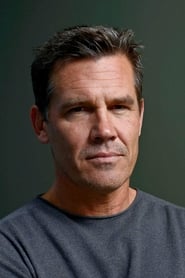

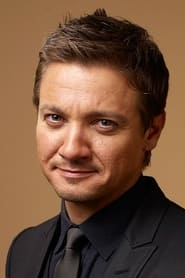




The film is matched to TMDB movie 812583, not a television record. The Cast and Characters gallery uses the credited cast records for this title, including Daniel Craig, Josh O'Connor, Glenn Close, Josh Brolin, Mila Kunis, Jeremy Renner, Kerry Washington, Andrew Scott, Cailee Spaeny, Daryl McCormack, Thomas Haden Church, and Jeffrey Wright.
The gallery below supplies credited character names and links to the site's actor profiles. There is no duplicate actor-and-character table. Cast identity and image paths come from TMDB; the official Netflix cast guide provides an additional identity check. [9]
Ending Explained
Who kills Wicks, and who designs the plan?
Nat performs the stabbing; Martha organizes the larger deception. The distinction matters. One answers the physical question of who could approach the body, while the other explains why a fake miracle was needed afterward. The scheme's public theater begins before the actual killing. [3, 7]
Why does Blanc stop explaining?
He has solved the case. His apparent failure gives Martha room to speak rather than making her the object of a triumphant accusation. Johnson's official explanation confirms that Blanc remains a nonbeliever: the change is his capacity for empathy, not a conversion to religious doctrine. [8]
More from RecapRush
 Companion (2025) Recap & Ending Explained: Why Iris Shows Her Mechanical Hand
 Weapons (2025) Recap & Ending Explained: Why Alex Turns Gladys’s Spell Against Her
 Spider-Man: Brand New Day (2026) Recap & Ending Explained: Why Peter Chooses to Be Known Again
Our reading is that Blanc relinquishes authorship of the final scene. He usually controls when the room understands the truth. Here he allows the person responsible to confront that truth in her own voice. This does not make the evidence disappear or make the crimes acceptable.
Is Martha forgiven because she was right?
No. Forgiveness and justification are different questions. Martha's devotion has helped her rationalize murder, deception, and her long hatred of Grace. Jud's compassion takes the existence of guilt seriously. If he treated her actions as harmless, there would be little meaningful work for forgiveness to do.
The scene becomes powerful because Martha does not have to become admirable before someone sees her as human. She has to become honest. The distinction prevents the ending from turning into a last-minute acquittal.
What does the diamond in the crucifix mean?
The literal answer is that Jud has hidden the treasure there. RecapRush interprets the image as both hopeful and uneasy. A community can rebuild its purpose without converting every valuable thing into money or leverage. Yet the object has not been destroyed, so the final shot preserves the possibility of temptation. The film closes a case; it does not prove that greed has vanished from the world.
RecapRush Interpretation
The central conflict concerns who gets to define a person. Wicks turns people into examples of sin. Blanc initially turns them into suspects. Martha turns a corrupt leader into a proposed saint. Jud's best moments allow another person to exist outside those useful categories.
That is why the movie's title can resonate beyond the fake resurrection. In our reading, emotional awakening belongs to the living characters who stop acting out inherited scripts. Blanc recognizes a limit to his appetite for victory. Jud returns to the work he actually values. Neither needs to reject reason or embrace a false miracle to change.
Martha's tragedy is that she treats belonging as something that must be preserved at any price. If the parish's image collapses, what remains of the life she has given it? Her scheme answers that fear through control. Jud offers a different answer: a community might survive by admitting what happened and changing what it welcomes.
Deep Analysis & Key Themes
Jud's anger makes his compassion more demanding
Jud's violent past prevents easy sainthood. His disclosure that the death in the boxing ring was not simply an accident complicates the comforting story we might construct about him. [2] RecapRush sees his empathy as a practiced choice made by someone who understands the impulse to hurt. He cannot locate evil safely in other people and assume that he is exempt.
That gives his final encounter with Martha a particular tension. She helped expose him to suspicion and manipulated the institution he hoped to serve. Holding her with compassion requires him to act against an understandable desire for retaliation. His goodness becomes a response, rather than a flattering identity.
Martha wants the church to survive without telling the truth
Her plan contains a revealing contradiction. She recognizes Wicks's corruption yet wants his apparent resurrection to preserve faith in the institution. She can imagine removing the dangerous man more easily than removing the mythology that gave him power.
For RecapRush, this is the psychology of protective denial. She wants restoration without disclosure. The result would leave the congregation dependent on an even more persuasive lie. Her final confession finally makes protection compatible with truth, although the human cost can no longer be undone.
Nat borrows trust to conceal harm
The murder method is also a social mechanism. People grant the doctor access because they assume he is helping. His profession makes the essential movement look reassuring. RecapRush reads that choice as a miniature version of Wicks's authority: a role associated with care can become a shield against scrutiny.
The solution therefore rewards a specific kind of attention. Ask what the trusted person actually does, rather than accepting what their title implies. The trick works because witnesses outsource judgment at exactly the moment they believe an expert has arrived.
Louise changes the scale of the movie
The phone call gives Jud no glamorous audience. He cannot see Louise, and her need does not arrive wrapped in the parish's elaborate imagery. He has to listen. RecapRush reads this as a quiet challenge to every public performance around it: care can be consequential without becoming a spectacle.
The scene also changes how a viewer experiences time. A delay in the investigation becomes the point of the sequence. What initially feels like an obstacle is someone else's crisis. That shift prepares us to accept an ending where the detective's delay is an ethical act.
Gothic design makes authority visible
Johnson has described the film's tonal move toward gothic horror while retaining comedy. The production's ship-shaped pulpit drew on Moby-Dick, according to the official design discussion. [10, 11] These are confirmed creative references, rather than invented claims about his intentions.
Our interpretation of the pulpit is spatial: Wicks occupies an elevated position from which he determines everyone else's place. The final emphasis on welcome proposes a different use of the same communal space. Architecture does not guarantee kindness; people decide what kind of gathering it will shelter.
What Most Viewers Missed
The apparent miracle depends on ordinary arrangements
The crypt-opening order predates the murder. Radio interference follows the collapse. Jud hides the flask because he thinks protecting Wicks's reputation will protect the congregation. [3] These clues concern timing and small decisions rather than an exotic hidden passage. The witnesses' confident sequence of events is the real lock Blanc must open.
Grace matters even when the mystery appears to be over
Recognizing the perpetrators of the recent deaths is not the same as recognizing the oldest injustice in the room. The inherited account of Grace has normalized contempt. Jud's attention to her moves the ending beyond an inventory of murders toward the community's habit of assigning shame.
The ending does not require miraculous healing
The official ending guide notes that Simone's return to playing does not mean her chronic pain has been cured. [8] That distinction matters to our reading of the epilogue. Renewal can mean recovering a meaningful activity while continuing to live with difficulty. It need not erase the body or promise that faith solves every condition.
Mid/Post-Credits
There are no additional scenes during or after the credits, according to the specialist AfterCredits listing. The last narrative reveal is the diamond inside the crucifix. No extra scene reverses Martha's death or supplies a hidden answer to the murder. [12]
Final Thoughts
Wake Up Dead Man delivers a workable solution to its impossible crime and then asks what solving it has taught the detective. Its emotional payoff depends on a change in behavior: Blanc makes space for confession, and Jud offers compassion without pretending there is nothing to confess.
For RecapRush, the final diamond is the right image for that imperfect hope. It sits inside a rebuilt symbol, carrying the memory of everything that has happened. A healthier community does not begin by having no darkness in its history. It begins by choosing how to live with the truth.
FAQ
Do I need to watch Knives Out and Glass Onion first?
This is a separate case with a new ensemble around returning detective Benoit Blanc. Earlier films add familiarity with his personality, but this mystery establishes its own suspects and evidence. [9, 10]
Is Jud responsible for the murders at the church?
No. His past and his anger make the suspicions convincing, but the present case exposes a scheme organized by Martha and carried out with Nat, followed by Nat's betrayal. [1, 7]
Does Wicks actually return from the dead?
No. The apparent return is Samson in disguise. The detective plot supplies a material explanation; the ending's spiritual meaning rests on compassion rather than on that manufactured spectacle. [6]
Does Blanc become religious?
Johnson says he remains a nonbeliever. His relationship with Jud changes how he responds to a guilty person's vulnerability. [8]
What is the correct TMDB ID?
It is movie 812583, verified against the title, release information, cast, and official trailer record. [13]
Join the conversation
What did you think of the ending? Share your interpretation. Spoilers may appear below.
This product uses the TMDB API but is not endorsed or certified by TMDB.
No comments yet. Start the conversation.